Top 10 Mom Influencers in India

Introduction 

Who is not on Social media these days? While it was once mainly for younger people, we’re now seeing a new wave of ‘Mom Influencers’—moms who are taking to platforms like Instagram and Facebook to connect with other parents and make a positive impact.

As parenting trends change and more moms seek inspiration online, these influencers have become the new faces of motherhood. They manage to balance being moms with successful social media careers, and they’re changing how we view motherhood through their creative and relatable content.

Their Instagram feeds give us an honest look at the ups and downs of parenting while offering helpful tips and advice. From discussing breastfeeding and childcare to sharing insights on women’s health and work-life balance, these influencers build strong communities around real issues.

In this blog, we’ll introduce you to the top 10 mom influencers in India who are leading the way and inspiring thousands of mothers each day with their stories, ideas, and empowering messages. Keep reading to meet these amazing moms who are making waves on Instagram!

NameDescriptionInstagram Followers
Ritu TanejaPilot, YouTuber, and mom blogger with content on daily joys and struggles of being a mother.1.7M
Masoom Minawala MehtaLifestyle and fashion blogger, known for balancing parenting and content creation.1.3M
Ishinna B. SadanaShares parenting tips and anecdotes, focusing on happy and healthy child-rearing.1.2M
Anupama Kumar Vijay AnandOffers relationship advice, counseling on pre-pregnancy, pregnancy, parenting, and breastfeeding.1.2M
Sameera ReddyActress and mother of two, advocates self-love, postpartum bodies, and balancing work and family.1.9M
Teejay SidhuTV personality, parent blogger, and mother of three, shares personal and work life, and travel experiences.995.9K
Neha DhupiaCelebrity influencer, shares parenting journey, including breastfeeding advocacy and postpartum care.7.2M
Mili JhaveriDigital creator and mom, shares honest experiences about motherhood and parenting.1.6M
Ambica AgarwalEntrepreneur and NLP practitioner, empowers parents to raise resilient kids.1.7M
Smriti KhannaActress and content creator, shares insights on motherhood, fitness, and fashion.1.4M

Also Check Top 10 Mom Influencers in India

Top 10 Mommy Influencers in India 

1. Yuvika Abrol – https://www.instagram.com/yuvika.abrol/   

Followers: 211k
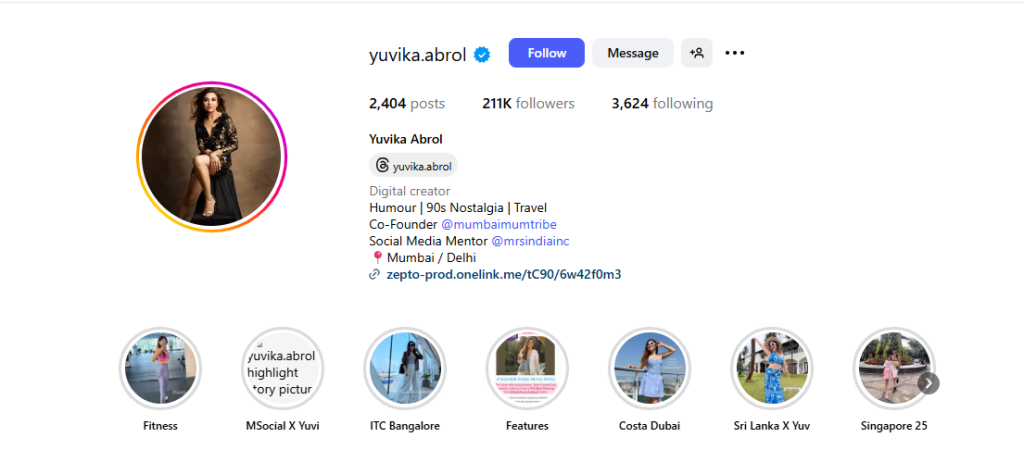
Yuvika shares her journey of motherhood with a focus on parenting tips, lifestyle, and personal experiences. Her engaging content often includes family moments, home hacks, and wellness advice, resonating with many moms looking for relatable and practical insights.

She shares parenting tips, recipes, lifestyle content and advocates for body positivity. Her engaging style and relatable motherhood journey resonates well with her large following.

2. Chhavi Mittal – https://www.instagram.com/chhavihussein/ 

Followers: 1.3M+

A breast cancer survivor, she spreads awareness on women’s health issues through her page. Her family vlogs and messages on battling illness inspires many. 

Chhavi, known for her candid approach to motherhood, shares everything from parenting challenges to health tips. Her vibrant posts include DIYs, fitness routines, and honest discussions about balancing work and family life, fostering a supportive community.

3. Ritu Taneja – https://www.instagram.com/riturathee/ 

Followers: 436K+
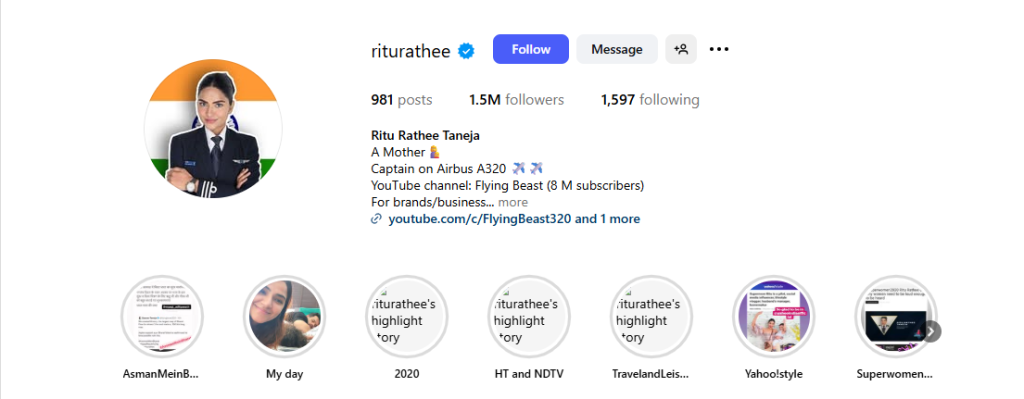
Ritu’s content is centered around the everyday joys and struggles of being a mom. She provides practical parenting tips, cooking ideas, and lifestyle content, engaging her followers with authentic stories and interactive posts.

She delivers lifestyle, beauty and motherhood tips through vibrant photos and reels. Her passion for crafts and DIY engages moms looking for creative activities.

4. Riddhi Deorah – https://www.instagram.com/riddhi_deorah/  

Followers: 211K+

Riddhi focuses on blending parenting advice with stylish living. Her feed features creative home decor ideas, parenting hacks, and family adventures, appealing to followers interested in merging aesthetics with practicality.

Through her journey as a working mom, she advocates balancing career and family via insightful posts. Her content on managing stress resonates with many.

5. Kirti & Ifthi – https://www.instagram.com/namma_ooru_couple/ 

Followers: 482K+

This dynamic duo showcases their life as parents through humorous and heartfelt content. Their engaging reels and posts cover parenting tips, cultural insights, and daily life, making them popular for their relatable and entertaining approach. 

This couple shares vlogs documenting their parenting adventures. Their humorous and lighthearted videos connected with many families on the platform.

6. Dr. Garima – https://www.instagram.com/the_doctor_mum/ 

Followers: 406K+
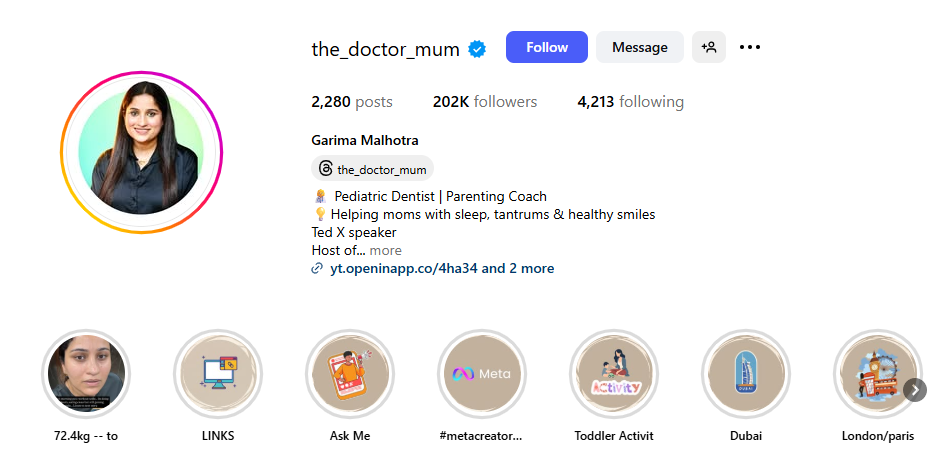
Dr. Garima combines her medical expertise with motherhood, offering health tips and wellness advice. Her content includes informative posts on children’s health, fitness routines, and mental wellness, making her a trusted source for health-conscious moms.

She addresses common health issues through an easy Q&A format. Her medical expertise and mom perspective makes her an influential health educator.

7. Meenakshi Singh – https://www.instagram.com/decor_miniz/   

Followers: 437K+

Meenakshi specializes in home decor and lifestyle content with a focus on family-friendly spaces. Her posts feature stylish and practical home decor ideas, DIY projects, and tips for creating a beautiful living environment for families.

This interior designer shares home décor ideas perfect for families. Her reels demonstrating creative projects inspire moms to try new activities.  

8. Shilpa Kamdar – https://www.instagram.com/momandtoddlers/ 

Followers: 163K+
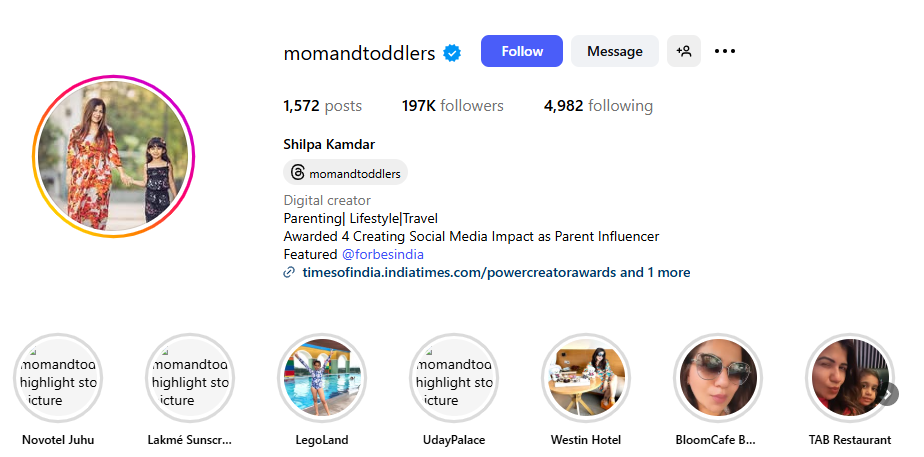
Shilpa’s content revolves around parenting toddlers with a focus on early childhood development. She shares creative activities, educational tips, and parenting advice tailored to young children, engaging her audience with practical and fun ideas.

She reviews baby products and shares toddler development tips through photos and videos. Her recommendations help new moms make informed choices.

9. Sameera Reddy – https://www.instagram.com/reddysameera/   

Followers: 1M+
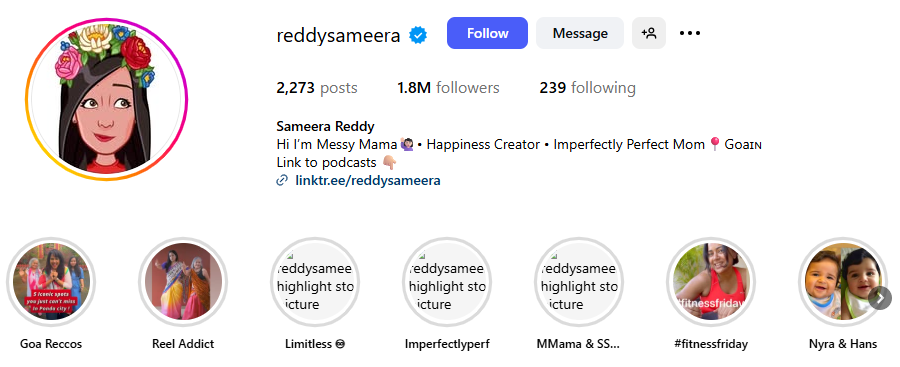
The actress uses her platform to normalize postpartum bodies and motherhood challenges. Her honest reflections resonate with many women.

Sameera blends her career and motherhood seamlessly, sharing insights on balancing work and family. Her posts include motivational content, fitness routines, and candid moments from her life, inspiring followers with her honest and empowering messages.

10. Satrupa Sharma – https://www.instagram.com/diapers_and_lipsticks/ 

Followers: 145K+
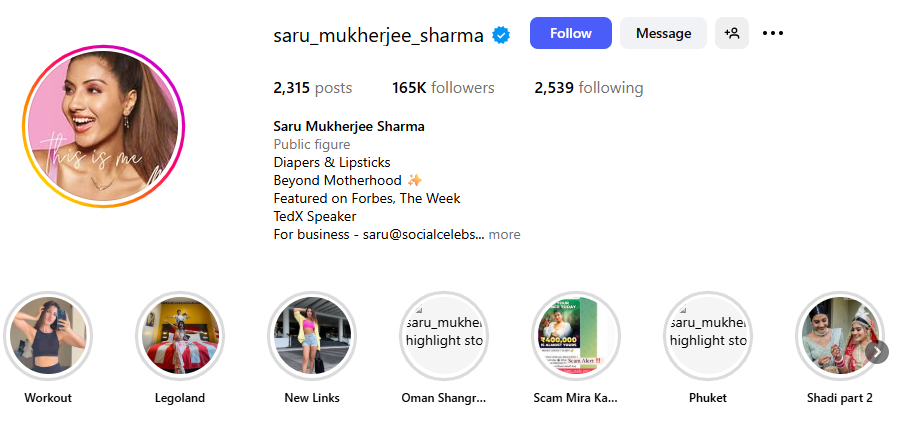
Satrupa provides a mix of parenting advice and lifestyle content. Her feed features everything from baby care tips and beauty routines to family travel and health, offering a well-rounded perspective on modern motherhood.

She discusses balancing motherhood and self-care through lifestyle vlogs. Her page inspires moms to prioritize their well-being alongside responsibilities.

Buzzfame – The Best Influencer Agency For Brand Collaboration 

If you’re looking to effectively partner your brand with influential creators, Buzzfame is the ideal platform to facilitate collaborative success. As a leading influencer marketing agency based in Chennai, they have extensive experience bridging connections between brands and influencers. 

Rather than a one-size-fits-all approach, Buzzfame takes the time to truly understand each client’s unique goals and audience.

Their specialised knowledge allows them to match brands with influencers who are genuinely engaging that target demographic. This targeted matching is what sets them apart and drives quantifiable results for clients.

Well-known Indian brands like Wink, Digital Scholar, VCM, Naturals, Vecura, Nippo, 1st Step, Oliva, and Levista Coffee have all benefited from Buzzfame’s strategic partnerships.

Their demonstrated track record shows how the agency nurtures win-win collaborations that increase exposure for brands and opportunities for influencers.

Whether you’re a brand looking to amplify your message or an influencer seeking brand partnerships, Buzzfame is the ideal platform to explore collaborative potential.

Their personalized service and proven success in fostering synergistic relationships make them the best choice to take your influencer marketing efforts to new heights.

Conclusion 

The field of mom influencers in India is rapidly growing as more mothers turn to social media for community and advice. The women highlighted have built engaged followings of mothers seeking relatable perspectives on parenting challenges.

They address overlooked topics and provide valuable support for moms. As social media becomes more integral, mom influencers will continue shaping how motherhood is perceived online. Brands can authentically reach target audiences through partnering with top influencers.

Overall, the rise of mom influencers is empowering mothers while transforming influencer marketing through more strategic, mutually beneficial collaborations.

FAQs

Who is the mommy influencer in India?
A prominent mommy influencer in India is Ami Desai, recognised for her engaging content on parenting.

Which mom has the highest Instagram followers in India?
As of 2024, the mommy influencer with the highest Instagram followers in India is Sameera Reddy.

Who is India’s biggest influencer?
India’s biggest influencer, known for commanding a massive following, is the cricketer Virat Kohli with over 240 million followers.

What are mommy influencers?
Mommy influencers are creators who share insights, experiences, and tips related to motherhood and parenting, often engaging with their audiences on platforms like Instagram.

Who are the top mom influencers in India?
Top mom influencers in India include Shraddha Singh, Harpreet Suri, and Mansi Zaveri. These mom creators share parenting tips, lifestyle content, and product reviews. As leading social media moms, they influence thousands of parents and collaborate with top brands.

Which mom has the highest Instagram followers in India?
Harpreet Suri, also known as @momwearsprada, is one of the top mom influencers on Instagram in India with a massive following. Her stylish take on motherhood and lifestyle makes her one of the most followed parent influencers India has seen.

Who are the best working mom influencers in India?
Some top working mom influencers in India include Shraddha Singh and Mansi Zaveri. These mom creators balance careers and parenting while sharing relatable content. Their honest take on work-life balance makes them top social media moms in India.

What type of content do mom influencers share?
Mom influencers on Instagram in India post parenting advice, product reviews, family vlogs, and self-care tips. These parent influencers in India offer relatable and useful content for fellow moms, making them trusted voices in the parenting and lifestyle space.

Are mom creators in India collaborating with brands?
Yes, most top mom influencers collaborate with baby care, fashion, and lifestyle brands. These social media moms help brands reach engaged audiences by promoting products with authenticity and trust, making mom creators valuable for influencer marketing campaigns.

Where can I follow mom influencers on Instagram?
You can follow top mom influencers on Instagram like @momwearsprada, @momsaysbadwords, and @kidsstoppress. These social media moms post daily updates, parenting hacks, and lifestyle content, making them among the most engaging parent influencers in India today.

Why are mom influencers popular in India?
Mom influencers are popular in India because they offer real, relatable parenting insights. These mom creators share personal journeys, challenges, and solutions, creating a trusted community. As top parenting influencers, they have strong engagement and influence among Indian moms.

What makes a successful mom influencer?
A successful mom influencer combines authenticity, consistency, and valuable content. Top mom creators share parenting experiences, lifestyle choices, and useful recommendations. Their credibility and relatability make them ideal social media moms for collaborations and campaigns with parenting brands in India.

How do brands benefit from working with mom influencers?
Brands benefit from working with mom influencers by gaining access to loyal and niche audiences. These parent influencers in India offer high engagement rates, trusted recommendations, and personal storytelling, making them ideal partners for parenting and family-oriented brand campaigns.

Are there mom influencers from different cities in India?
Yes, India’s top mom influencers come from major cities like Mumbai, Delhi, Bangalore, and Hyderabad. These social media moms bring regional parenting perspectives and connect with diverse audiences, expanding their reach across India’s digital parenting and mom creator community.

Measuring Influencer Marketing ROI: Tools and Techniques

Introduction 

Influencer marketing allows brands to be where their audiences are. YouGov also reported that half of Gen Z shoppers make purchases after influencer endorsements. Given these challenges, first-party data and influencer marketing will continue growing in importance.

The role of influencer marketing agencies is also crucial, as they help brands identify relevant influencers and measure the return on investment of these campaigns.

What Is Influencer Marketing And The Role of Influencer Marketing Agencies?

Influencer marketing agencies play an important role in optimising ROI for brands. They help identify the right influencers based on the target audience and campaign goals.

They negotiate deals and contracts with influencers on behalf of brands. Agencies work with influencers to create engaging sponsored content, such as posts, stories, videos, etc., that align with the brand’s messaging.

They track key metrics like impressions, engagement, and conversions to analyse the performance of each campaign. With their expertise and resources, agencies ensure campaigns are focused on business goals like sales, leads, and downloads instead of just awareness.

They also help brands optimise future campaigns based on learnings. Working with an agency helps streamline operations and get better returns for brands with their experience running multiple influencer programs.

Key Metrics for Measuring Influencer Marketing ROI

Role of Influencer Marketing Agencies requires a deep understanding of key performance indicators (KPIs) that align with your campaign goals. Below are some of the most crucial metrics to consider:

Engagement Rate

Engagement Rate is a vital metric for assessing the effectiveness of your influencer marketing campaign. It measures how actively the audience interacts with the content, including likes, comments, shares, and saves. A high engagement rate indicates that the influencer’s audience is not only interested in the content but is also resonating with your brand message.

To calculate engagement rate, use the following formula:

Engagement Rate=(Total Interactions (likes, comments, shares)​/Total Followers))×100

A strong engagement rate is often a sign of a well-matched influencer who has an authentic and loyal following, which is more valuable than sheer follower count. By focusing on engagement, brands can gauge the influencer’s ability to foster genuine connections and drive interest in their products or services.

Conversion Rate

Conversion Rate is perhaps the most direct indicator of the success of your influencer marketing efforts. This metric tracks the percentage of the audience that completes a desired action, such as making a purchase, signing up for a newsletter, or downloading an app, after being exposed to the influencer’s content.

The formula to calculate conversion rate is:

Conversion Rate= (Number of Conversions/ Number of Clicks or Impressions)*100

A high conversion rate suggests that the influencer’s audience is not only engaged but is also taking tangible actions based on their content. Monitoring this metric helps you understand how effectively the influencer is driving actual business outcomes and contributing to your overall marketing goals.

Cost Per Acquisition (CPA)

Cost Per Acquisition (CPA) is a critical financial metric that measures the cost associated with acquiring a customer through your influencer marketing campaign. This metric is particularly useful for understanding the efficiency of your marketing spend and ensuring that your investment is leading to profitable customer acquisition.

The CPA formula is:

CPA= Total Campaign Cost/Total Number of Acquisitions

A lower CPA indicates that your influencer marketing campaign is cost-effective and successful in generating new customers at a reasonable cost. By keeping an eye on CPA, you can optimize your campaign budget and focus on influencers who deliver the best results for the lowest cost.

Return on Ad Spend (ROAS)

Return on Ad Spend (ROAS) is another essential metric that directly ties the financial returns of your influencer marketing campaign to the amount spent. ROAS provides insights into the revenue generated for every dollar spent on the campaign, making it a key indicator of profitability.

To calculate ROAS, use the following formula:

ROAS= Revenue Generated from Campaign​/ Total Campaign Spend

A high ROAS means that your campaign is generating substantial revenue compared to the investment, indicating a successful and profitable marketing effort. This metric is particularly useful for brands looking to maximize their returns and make data-driven decisions about future influencer partnerships.

Tools for Tracking and Analyzing Influencer Campaigns

Analytics platforms 

These provide metrics on engagement, impressions, likes, comments, shares and trends over time. They give insight into how campaigns impact traffic, leads and sales. Popular options include Google Analytics, HubSpot and Traackr. 

Social media monitoring tools 

These allow agencies to track mentions, hashtags and sentiment in real-time across platforms like Instagram, Twitter, etc. By monitoring conversations, they can assess influencer messaging and make strategic adjustments. Tools like Hootsuite, Brandwatch and Sprout Social are commonly used.

CRM integration 

Connecting influencer data to Customer Relationship Management systems helps track influencer relationships and measure their impact on customer acquisition and retention. Integrating tools like Salesforce, HubSpot CRM or Zoho CRM provides a holistic view of return on investment.

By leveraging these platforms and tools, agencies can not only analyze campaign performance but also optimize ongoing efforts. This data-driven approach helps maximize ROI through informed decision-making, strategy refinement and more meaningful audience engagement over time.

Techniques to Maximize Role of Influencer Marketing Agencies

1. Setting Clear Objectives

Having clearly defined objectives for the influencer marketing campaign is important to maximize ROI. Objectives should be specific, measurable, achievable, relevant and time-bound (SMART). This will help track the performance of the campaign and see if the objectives were met.

2. Choosing the Right Influencers 

Influencers with the right demographic and number of engaged followers who are a good fit for the brand’s target audience should be chosen. Their content and messaging should also align with the brand’s. Micro-influencers in the target niche may perform better than celebrities in terms of engagement and conversions.

3. Negotiating Contracts and Rates

Negotiating deals and rates with influencers upfront is important. Contracts should clearly specify deliverables, timeline, payment terms etc. Performance-based payment models where influencers are paid based on measurable metrics like clicks, downloads or sales can help maximize ROI.

4. Monitoring Campaign Performance

Setting key performance indicators (KPIs) and constantly monitoring and analyzing campaign performance against goals using analytics tools is key.

This helps track which influencers, posts or creatives are most effective. Underperforming elements can be replaced to optimize spend and improve ROI over the campaign period.

Case Study: Naturals Salon’s ‘My Story Behind’ Influencer Marketing Campaign

Background

Naturals Salon is a leading beauty salon known for its high-quality services. However, the brand wanted to elevate its awareness through more authentic and inspiring narratives beyond just promotional beauty content. 

Objective

The objective was to boost brand awareness by showcasing the personal journeys and transformations of influencers who visited the salon. The campaign aimed to foster emotional connections by emphasizing the challenges influencers overcame with the help of Naturals Salon’s services.

Strategy

BuzzFame was hired to develop an influencer marketing campaign called ‘My Story Behind’. They identified 8 influencers from diverse backgrounds including stylists, lifestyle bloggers, mothers and celebrities to appeal to a wide audience. 

Implementation  

The influencers visited Naturals Salon and received grooming services. They then created content sharing their personal stories, challenges faced and how the salon helped them feel transformed. Stories were recorded to capture the essence of each influencer’s journey.

Results

The campaign reached over 1.5 million people and generated 70,000 likes and 2,000 clicks, far exceeding engagement metrics of typical beauty promotions.

Audiences emotionally connected to the influencers’ stories and felt the brand provided more than just services. Naturals Salon was pleased with the ability to boost awareness while fostering deeper audience connections through personal narratives.

Summary Of The Campaign 

This case study demonstrates how leveraging diverse influencers to share authentic stories can transcend traditional beauty promotions. BuzzFame’s strategic influencer campaigns effectively position brands as contributors to personal transformations, not just service providers.

Challenges in Measuring ROI

  • Define clear goals and KPIs upfront – Know what you want to achieve in terms of leads, sales, brand awareness etc. This will help you track ROI effectively. 
  • Track multiple metrics, not just sales – Track metrics like impressions, engagement, new followers etc. in addition to direct sales. Influencer marketing impact may not be immediate.
  • Attribute sales properly – It can be difficult to attribute sales directly to influencer campaigns. Use tools and strategies like promo codes to better track attribution.
  • Consider lifetime customer value – Don’t just look at immediate sales. Track how influencer campaigns impact long-term customer loyalty and lifetime value. 
  • Account for campaign lag time – It may take time for influencer content to drive results. Give campaigns adequate time (4-6 months) to show impact. 
  • Analyze qualitative metrics too – Track increased brand mentions, surveys to measure brand lift etc. to understand non-quantitative impact.  
  • Collaborate with influencers on tracking – Brief influencers about your tracking systems and goals to ensure right data is captured.
  • A/B test campaigns – Run controlled tests to understand what really works versus assumptions. This helps optimize spend.
  • Use multiple tools for tracking – Leverage tools like Google Analytics, social listening, CRM integrations for full picture analysis.
  • The key is setting realistic goals, tracking both quantitative and qualitative metrics holistically over time. Proper planning and analysis is vital for accurate ROI measurement.

Wrapping Up 

Influencer marketing agencies play a key role in maximizing ROI. They apply strategic approaches across campaign planning, execution and analytics. Leveraging tools allows agencies to gather insightful engagement and conversion metrics.

This data-driven approach enables optimization. While direct attribution poses challenges, monitoring quantitative and qualitative indicators provides a holistic view of impact.

Collaboration ensures the right data is captured. Overall, by focusing on engagement and outcomes through strategic planning, execution and analytics led by influencer marketing agencies, brands can effectively reach customers and maximize their investments in today’s digital landscape.

FAQs

  1. How to measure ROI in influencer marketing? 

ROI in influencer marketing is measured by tracking sales, leads or other desired actions directly attributed to influencer campaigns.

  1. How to measure influencer marketing success? 

Influencer marketing success is measured by tracking engagement metrics like views, shares, comments, links clicked from influencer posts promoting your brand or products.

  1. What are the 4 steps involved in measuring content marketing ROI? 

The 4 steps to measure content marketing ROI are: 

1) Set goals 

2) Track key metrics 

3) Analyze results 

4) Adjust strategy based on findings.

  1. How is ROI measured in marketing? 

ROI in marketing is measured by comparing the profits generated by a particular marketing activity or campaign to the costs involved in executing that activity or campaign.

5 Questions To Ask Before Working With An Influencer

In today’s crowded digital world, standing out and gaining new customers isn’t easy. That’s where social media influencers come in – they’ve already built loyal followings who pay attention to what they recommend. 

Partnering with the right influencer can help you reach those engaged audiences. But how do you know which influencer is truly the best fit for your brand? Before signing the agreement, asking them some important questions is crucial. Their answers will reveal if they understand your target market and can authentically represent your business. 

In this blog, we will explore five key questions to ask an influencer before moving forward with a campaign. Their responses will help you identify red flags early on and find influencers most likely to expand your reach in a meaningful way.

QuestionWhy it’s important
What are your campaign goals and how will you measure success?Determine what you want to achieve (brand awareness, website traffic, sales) and how you’ll track progress. Influencer marketing platform SARAL recommends defining clear metrics and KPIs to assess the campaign’s effectiveness.
Who is your target audience, and how does it align with ours?Understand the influencer’s audience demographics, interests, and online behavior. Ensure their audience aligns with your target market to maximize impact and avoid wasted reach.
What is your content style, and how authentic is it?Evaluate the influencer’s content quality, tone, and overall aesthetic. Verify if their style aligns with your brand’s messaging and values.
What is your experience with similar brands, and what results have you achieved?Before collaborating with an influencer, inquire about their experience with similar brands and the results they achieved. Ask for specific campaign examples and outcomes, like increased engagement, sales, or brand awareness, to evaluate their effectiveness and suitability for your brand’s goals.
What is your approach to collaboration and communication?Before engaging an influencer, assessing their communication and collaboration approach is crucial. You want to ensure they are responsive, receptive to feedback, collaborative, and communicative to ensure a smooth partnership.
Who is your target audience?Ensures the influencer’s audience aligns with your brand’s demographic and helps maximize the impact of your campaign.
What is your engagement rate across platforms?Indicates how actively followers interact with the influencer’s content, which is a key measure of their actual reach.
How familiar are you with our brand and products?Gauges whether the influencer can authentically speak about your products or services, fostering a more genuine connection with their audience.
What is your creative process for developing content?Helps you understand their workflow, ensures creative alignment with your brand, and allows for effective collaboration.
Can you provide examples of past collaborations and their results?Provides insights into their experience, effectiveness in driving results, and helps assess their potential ROI for your campaign.

Are you ready to know what those five questions are? Keep reading to learn more!

3 Main Goals Of Influencer Marketing

Influencer marketing has become an indispensable strategy for brands seeking to thrive in the digital age. Three primary goals make working with influencers an essential component of modern marketing. They are:

  • Brand Awareness

Influencers have a special skill to magnify your brand’s visibility among their committed and engaged followers. You can quickly boost brand awareness by partnering with influencers whose audience matches your target demographic. 

Influencers can introduce your products or services to a large and receptive audience, often more efficiently than traditional advertising channels.

  • Follower Engagement

Influencer marketing goes beyond just exposure and helps to create meaningful engagement. Influencers have already established trust and connection with their followers. 

When they endorse your brand, their audience is more likely to engage with your content, ask questions, and show genuine interest. This engagement helps build a loyal community and provides valuable feedback and insights.

  • Driving Sales

Finally, the main objective of marketing is to increase sales. Influencer marketing can help achieve this goal by utilising the credibility of influencers. 

When influencers genuinely recommend a product or service, their followers are more likely to purchase it, resulting in measurable return on investment (ROI) and increased revenue.

Working with influencers is instrumental in achieving these three key goals: expanding brand awareness, fostering follower engagement, and ultimately driving sales, making it a pivotal marketing strategy for modern businesses worldwide. 

Bouns Tip: 10 Influencer Marketing Trends To Make Use Of In 2023

How Do You Find A Relevant Influencer For Your Campaign?

Finding influencers that are a good match for your brand and goals takes some legwork. But with the below tips, you can get started on a successful quest!

  • Start by defining who your target audience is in terms of demographics, interests, and where they spend time online. 
  • Look for influencers with engaged followings that align with your audience profile. 
  • Check their content and captions – it should reflect your industry and messaging. You can search by hashtags or location on Instagram to discover influencers in your niche. 
  • You can also use tools that allow you to search based on engagement metrics. 
  • Once you have some potential influencers in mind, evaluate their reach and engagement rates on recent posts. 
  • Follow accounts that seem promising and note who your target audience already interacts with organically. 
  • You can also search directories or work with an influencer marketing agency like BuzzFame to help identify suitable partners. 

Taking the time to handpick relevant influencers sets your campaign up for success by tapping influencers your audience already knows and trusts.

Need more clarity on choosing influencers for your marketing campaigns? Check out our blog on How To Find The Right Influencer For Your Next Influencer Marketing Campaign to know more!

Top 5 Questions To Ask An Influencer 

When considering collaborating with an influencer for your brand or campaign, asking the right questions is essential to ensure a successful partnership. 

Here are the top five questions you should ask an influencer before you work with them:

1. Have You Ever Created Content In The Same Niche As Us?

Knowing whether the influencer has relevant experience in your niche is extremely important. This question will help you evaluate their expertise and determine if their audience is similar to your target market. 

If they have worked within your niche previously, they might better understand your brand and audience, which can result in more effective collaborations.

2. How Do You Disclose Sponsored Posts?

Transparency is key in influencer marketing. Asking this question ensures that the influencer complies with advertising regulations. They should disclose when a post is sponsored or contains affiliate links. Proper disclosure maintains trust with the audience and protects your brand from potential legal issues.

You can ask them how they will disclose such ads and see if they align with your expectations and values. Some may prefer collaborating with your social media account, while others might just want to use a hashtag. Make it a point to settle on the same page. 

3. Can You Share The Performance Data From Your Previous Partnerships?

If you’re looking to collaborate with influencers to drive sales, then performance data is invaluable.

It allows you to assess an influencer’s effectiveness in driving engagement, reach, and conversions. Ask for metrics like reach, engagement rates, click-through rates, and conversion data to evaluate their impact on previous campaigns. Beyond all these, you can also use an influencer analysis tool to check for all the data. 

4. Do You Want Help In Creating The Content For Our Campaign?

Collaboration is key to a successful influencer partnership. As mentioned before, every influencer has their style of creating and posting content. While some influencers actively participate in the brand’s content creation process, others simply want to be told what is needed for the ads.

Asking about their willingness to collaborate on content creation shows your interest in their creative input. It can lead to more authentic and engaging content that resonates with their audience.

5. Do We Have The Right To Use Your Content?

This question addresses the rights and usage of content created during the campaign. 

Clarify whether you can repurpose their content for your marketing needs, such as on your website or social media. If you don’t get this clear, you can run into problems with copyright laws or other issues. You also don’t want the influencer to use the content they produced for you in a campaign for a rival, right?

Clarifying this ensures both parties are on the same page regarding content ownership and usage rights.

By asking these five questions, you can clarify all your doubts and concerns, ensuring a smooth campaign for both parties! 

Setting Clear Goals And Expectations With Influencers

Once you’ve found an influencer who seems like a good fit, it’s time to define the campaign’s objectives. It is crucial to do this before you start any work to ensure that both of you are on the same page regarding your goals.

  • Define specific metrics you’ll use to measure success, such as a certain number of new followers, engagement rate increase, or sales conversions. 
  • Be upfront about how performance will be evaluated. 
  • You can also establish a timeline for deliverables from the influencer, like when posts and stories will go live. 
  • Discuss pricing and payment terms upfront to avoid any confusion down the road. 
  • Keep communication open so you can provide feedback to one another throughout the campaign. 

Setting clear guidelines from the very beginning will help you both stay accountable. It also makes the partnership work more smoothly and gives the campaign the best chance of success.

Not Sure How To Go About Working With An Influencer? We’re Here To Help!

Meet BuzzFame, the best influencer marketing agency in India. We specialise in connecting brands with the country’s top social media influencers

Our team of experts will work with you to create custom strategies to improve audience engagement and drive action. With a proven track record of successful brand-influencer collaborations, we stand out for our authenticity and transparency in all our campaigns.

Whether you’re a new brand looking to mark a presence or an established business looking to grow your audience, we’re here to help.

Get in touch today for expert influencer marketing assistance to empower your brand!

Conclusion

So, that’s all we had to offer! Did you find those questions helpful and valuable? Evaluating influencers based on these five critical questions will help you make an informed decision about the best partners for your brand. 

Look for influencers who display a thorough understanding of your goals and audience. Their engagement rates, past successes, and niche should closely align with what you’re trying to achieve. 

Taking the time at the start ensures you don’t waste resources on influencers unlikely to move the needle. Most importantly, choose partners you believe your customers will genuinely trust. Influencer marketing can be a powerful way to grow your business when you get the right fit!

Also, you can get frequent updates on buzzfame instagram page

FAQs Related To 5 Questions To Ask Before Working With An Influencer

What should I consider when hiring an influencer?
Check audience relevance, engagement rate, content quality, and authenticity. Ask about past campaigns, audience demographics, and results. These key influencer marketing questions ensure the influencer aligns with your brand and delivers meaningful results.

What is the best practice when working with an influencer?
Set clear goals, define deliverables, agree on timelines, and ensure transparent communication. Ask key questions to influencers about content style, audience fit, and performance tracking. Build trust and give creative freedom for authentic, effective influencer marketing.

How do you negotiate with an influencer?
Start by discussing goals, deliverables, timelines, and budget. Ask questions about influencer marketing like: What’s included in your rate? Can we bundle content or extend usage rights? Be respectful, flexible, and focus on creating a win-win partnership

What should I ask an influencer before collaboration?
Ask about their audience demographics, engagement rate, past brand partnerships, content style, and performance metrics. These questions to ask an influencer help ensure brand fit, authenticity, and campaign effectiveness. Clarify deliverables, timelines, and how they disclose paid promotions.

How do you ask an influencer for a rate?
Politely message the influencer with campaign details, then ask, “Can you share your rates for this type of collaboration?” or “Do you have a media kit?” These are professional questions to ask influencers to understand pricing and deliverables clearly.

What are good questions to ask influencers before collaboration?
Good questions to ask influencers include: What’s your audience demographic? Have you worked with similar brands? Can you share past campaign results? What’s your content strategy? How do you disclose partnerships? These questions help assess influencer alignment and campaign success. Always ask these questions to Instagram influencers or any social media influencer before starting a partnership.

Why should I ask questions to influencers on Instagram before hiring?
Asking questions to influencers on Instagram helps ensure your brand values align, their audience is genuine, and they have relevant experience. It’s crucial to clarify content expectations, metrics, and legal disclosures. These influencer marketing questions reduce risk and improve ROI by ensuring you’re working with the right creator.

What should I ask when I’m asked to meet an influencer for collaboration?
When asked to meet an influencer, inquire about their past campaigns, engagement rate, audience demographics, content format, and campaign timeline. These are essential questions about influencer marketing that help evaluate credibility and fit. Clear communication from the start ensures smoother execution and stronger results.

How do I frame questions to ask an influencer professionally?
Use a respectful, business-oriented tone. Ask questions to a social media influencer like: What’s your typical engagement rate? Can you share case studies? How do you measure success? Being clear and concise with your questions for influencers builds trust and transparency, leading to more productive collaborations.

What are key influencer marketing questions to ask before signing a deal?
Important influencer marketing questions include: Who is your target audience? What content formats do you specialize in? How do you track ROI? What are your rates and deliverables? These questions about influencers help set clear goals and avoid misunderstandings in future campaigns.

Are there specific questions to ask Instagram influencers for brand safety?
Yes. Essential questions to ask Instagram influencers for brand safety are: Do you follow platform guidelines? How do you handle negative feedback? Have you ever faced controversies? These questions about influencers protect your brand reputation and ensure you’re working with a responsible partner.

How do I know which questions to ask a social media influencer?
Choose questions for influencers that align with your campaign goals. Focus on performance metrics, audience insights, content style, and past brand experiences. The right questions to ask a social media influencer ensure strategic alignment and higher campaign effectiveness.

What results-related questions should I ask an influencer?
Ask: Can you provide past campaign results? What was your average reach and engagement? How do you track performance? These questions about influencer marketing help evaluate ROI and ensure you’re investing in the right influencer with proven results.

How many questions to ask influencers on Instagram before a paid collaboration?
At least five solid questions to ask influencers on Instagram should cover audience, content, pricing, disclosure, and past work. These help gauge compatibility, reduce risks, and ensure smoother collaboration. More detailed influencer marketing questions can follow once the partnership advances.

Why are questions about influencers important before a campaign?
Questions about influencers reveal credibility, audience alignment, and potential risks. They help avoid fake followers, ensure content consistency, and align expectations. Asking the right questions to ask an influencer is essential for a successful influencer marketing strategy.

The Power of Micro Influencers: Why Smaller is Sometimes Better

Introduction

Micro-influencers have fewer followers, but their fans really listen to them. People trust what they say because they feel more like friends. That’s why brands like working with them—followers pay attention, like their posts, and often buy what they suggest. Even though they’re not super famous, they can help a brand more than big influencers with lots of followers who don’t talk to their fans as much.

With social media embedded in modern culture, influencer marketing has become a hot trend. The influencer marketing industry is booming with an amazing ROI. It is projected to reach a market cap of $21.1 billion by 2025.

Surveys say that 49% of consumers make a purchase inspired by an influencer. That is why, brands of all types look for influencers who can help them reach the masses and boost their sales. Before we get to the impact of influencers, let us understand the most crucial part of social media marketing. 

Feature/AspectMicro-Influencers (1,000-100,000 followers)Mega-Influencers (1M+ followers)
Audience SizeSmaller, highly niche audiencesVast, broad audiences
Engagement RatesSignificantly higher (e.g., up to 60% higher)Generally lower
Engagement Example (Instagram)3.86% average1.21% average
Authenticity & TrustPerceived as more authentic and relatable, fostering greater trustMay be seen as less authentic, more commercial
Cost-EffectivenessMore budget-friendly, allowing for campaigns with multiple influencersOften very expensive, with high fees for endorsements
Niche TargetingExcel in specific niches, reaching highly targeted audiencesAppeal to broad audiences, potentially less targeted
Content Quality & CreativitySkilled at creating engaging and authentic content, often with a fresh perspectiveContent may be more polished, but potentially less relatable
Long-Term PartnershipsKeen on building lasting relationships, fostering brand loyaltyOften involved in one-off collaborations
Localized MarketingEffective for targeted campaigns within specific geographic areasLess suitable for hyper-focused local campaigns
Example CampaignHelloFresh partnered with micro-influencers to generate buzz, leading to a 3.3x higher ROIBrands may use celebrity endorsements for mass awareness
Average Cost per Instagram Post$100-$500Can be over $100,000
Average Cost per YouTube Video$200-$1000Can be very high, varies greatly
Average Cost per TikTok Video$25-$125Can be expensive

Also Check Influencer Marketing ROI: Measuring Success with Agency Expertise

Influencer Marketing

It is a part of social media marketing where brands leverage the social media following of influencers to promote their products or services. These influencers harness their credibility and engagement to endorse brands. It gives the entire experience of brand endorsements a personal touch. 

A few years ago, celebrities with their massive following were the only influencers. But now thanks to social media, working-class people who look like you and me can become the face of a brand. Although fame is open to everyone, there are categories to it:

1. Nano Influencers (1k-10k  followers)

These influencers have a close-knit community with a loyal fan base. While they have a very niche following, they often get high engagement rates. Nano influencers are the perfect choice for start-ups who are in the early stages and want to test their product.    

2. Micro-Influencers (10k-100k)

The Micro-Influencers focus on specific niches like beauty, fitness, travel and lifestyle. They have a strong presence on platforms like Instagram, TikTok, and YouTube. With high engagement rates and an intimate connection with their audience, micro-influencers are brand favourites. 

3. Macro-Influencers (100k- 1 million)

Often termed social media personalities, these next-level influencers have a large fan base. They offer a high reach and are often considered experts in their fields. Although engagement tends to drop with the size of the audience, they can help brands reach new audiences. 

4. Mega-Influencers (1M+ followers)

Mega-Influencers are public figures with celebrity status. This category typically includes actors, musicians, and athletes. They have a massive fan base that can transcend cultures and boundaries.
Mega Influencers are a brand on their own, hence they give you unparalleled exposure but low engagement rates. These influencers are great for large-scale brand awareness campaigns

Why Micro-Influencers?

When it comes to shaping consumer choices, micro-influencers with a small following can make a big impact. This section of influencers dominates engagement with authenticity. Here are some of the reasons why sometimes, smaller is better. 

1. Honest engagement and a strong fan base

A high engagement rate is a primary reason why micro-influencers are industry favourites. With an increase in the follower count, the engagement rate often takes a hit. Since micro-influencers interact with their followers regularly, they have an honest engagement and a strong fan base.

This allows the brand to create a niche market for its product and understand its target audience in a better way. Since micro-influencers have an intense desire to build a strong community, they are more creative with their content.  Their content gets honest attention which builds trust and this trust leads to conversion.

2. Relatibilty factor

Netizens want to consume content that feels authentic. They want to follow someone they can relate to. This gives micro-influencers a competitive edge over others because they are perceived as real people. The X factor of any micro-influencer is their relatibility.

Their followers often view them as friends or someone they are inherently rooting for. This relatability factor makes their content more trustworthy and sharable.

3. Niche audience

Micro-influencers have a niche following which lies in the range of 10k-100k. Most of their followers have seen them grow from a novice content creator to a bona fide personal brand. Hence the brand endorsement feels more authentic.
Since micro-influencers create content specific to a niche, they build a community of like-minded individuals around them. This builds credibility and leads to a cult-like following. That is why consumers trust their recommendations over branded content.

For instance, Digital Deepak created content on digital marketing and then converted it into a course for his community. His digital marketing course gets sold out immediately in a one-hour launch webinar.

4. Cost Effective ROI

Macro-influencers with their massive following and a ‘social media celebrity’ status, often come with an outrageous cost. It is not unusual for top-tier influencers to charge hundreds of thousands for a single post. This can be challenging for brands with budget constraints.

On the contrary, micro-influencers charge less for their services and give high engagement. It gives the brand more room to work on the product and its market positioning. Brands can also work with multiple micro-influencers across various niches in the available budget. 

5. High conversion rates

Since micro-influencers have built their community from the ground up, they know what their followers want. That is why when a micro-influencer recommends a product, it’s not just an endorsement, it is an invitation. Trust is the foundation of the micro-influencer cult. Hence along with an honest engagement, they drive high conversions.
Followers tend to buy the product because it is coming from someone who “gets them.” Hence micro-influencers recommendations have a strong word of mouth. 

6. Long-term partnership.

Brands always look for consistency and long-term partnerships. As micro-influencers have a loyal fan base with relatable content, they are industry favourites for going the distance. Micro-influencers create a variety of content which includes Vlogs, Reels, and long-form YouTube videos.

They also have a unique ability to be creative with trends which adds to their versatility as a content creator. Their giveaways and Instagram lives further strengthen their bond with the audience.
All of these attributes make micro-influencers perfect for building a strong brand perception. 

Micro-Influencer working manual

Now that we know the power of micro-influencers, let us understand how to build a successful relationship with them. 

1. Choose ‘The One’

Do thorough research before onboarding any influencer to promote your product. Look for influencers that align with your brand values and have a genuine inclination towards the brand.

Make sure that their audience matches your customer profile. If they tick all the boxes, they are ‘The One’ you were looking for. 

2. Build Quality relationships. 

The best way to play the long-term game is to build quality relationships. Nurture your relationship with micro-influencers by engaging with their content consistently. Since they are known for their authenticity, make sure that you give them enough creative freedom to get the best output. This will help them to genuinely connect with your brand. 

3. Define clear objectives

Be specific with your goals regarding brand awareness, engagement or conversions. This will help micro-influencers to create content that fits the bill.

4. Communicate clearly

Communication is the key to all the relations. Clear communication reduces misunderstandings and keeps everyone on the same page. Hence there should be regular communication with the influencers so that they can understand the campaign better. 

Join the Buzz with Buzzfame

Buzzfame is your gateway to being famous for your content. We are an influencer marketing agency known for connecting brands and influencers. From tech, and food to fashion and lifestyle, we cover all the niches with professional expertise. We have a proven record of enhancing brand visibility and engagement.
Buzzfame has a strong community of 500+ influencers who have worked with 25+ brands with 50 million+ reach. Our creative strategy includes thorough research followed by creative collaboration that gets the output.

We have enhanced the digital presence of well-known brands like Dorco, Digital Scholar, Levista and many more. Whether you are an influencer looking to spread your wings or a brand that wants 10x growth, you need to join the buzz with Buzzfame. 

Final Thoughts

Micro-influencers may not have the fame or massive reach of celebrities, but they have a niche following with a strong connection. They offer honest engagements with high conversion rates at an affordable price.
Brands can tap into their authentic fan base to increase brand awareness and drive meaningful conversions. With the creative flair of micro-influence, brands can also go viral. Just like the quote – a small man can cast a very large shadow, micro-influencers can also get major results for your brand. 

Faq’s Related To The Power of Micro Influencers

Why are micro-influencers effective?
Micro-influencers tend to have honest engagement and drive high conversions. They also share a genuine connection with their audience which leads to authentic brand interactions.

What are the benefits of working with micro-influencers?
You get a community with a loyal fan base. Working with micro-influencers is also cost-effective as compared to macro and mega-influencers.

How to find the right micro-influencers for my brand? 
Look for influencers whose values align with your brand, and who have a strong community.

How to measure the success of a micro-influencer campaign?
Track metrics such as engagement rate, conversions and overall reach to evaluate the success of the campaign.

Are micro-influencers better than big influencers?
Yes, micro-influencers are often better due to higher engagement and trust. Their smaller, loyal audiences respond more to content, making campaigns feel personal and authentic—key reasons why micro influencers are better for many brands.

What defines a micro-influencer?
Micro influencers usually have 10K–100K followers. They focus on niche topics like fashion, fitness, or lifestyle. Their audience is small but highly engaged, making them powerful voices in the influencer space.

Why are micro-influencers better for brand partnerships?
Micro-influencers build stronger relationships with followers, which leads to better engagement and trust. This connection often results in a higher micro influencer conversion rate, giving brands better results than macro campaigns.

What is the average micro influencer cost in 2025?
Micro influencer cost varies by niche, but in 2025, it typically ranges from $100 to $1,000 per post. Rates depend on engagement, content type, and follower count, making them affordable for small brands.

Who are some famous micro influencers to follow?
Famous micro influencers include niche voices like Krutika (TheMermaidScales) and Aashna Hegde. They represent the power of influencers with small but highly connected audiences across fashion, lifestyle, and entertainment.

What is a micro influencer lifestyle?
A micro influencer lifestyle involves daily content creation, audience engagement, and brand collaborations in specific niches. Micro lifestyle influencers often showcase relatable routines, products, and personal experiences to stay authentic and trusted.

How do small influencers help boost conversions?
Small influencers connect deeply with their followers. This trust leads to better responses and purchases, increasing the micro influencer conversion rate. Brands see better ROI from these focused, personal recommendations

How can I become a micro lifestyle influencer?
Start by posting regularly in a niche, engaging with followers, and staying consistent. Micro lifestyle influencers grow by being authentic, creating quality content, and slowly building a loyal community.

Why is smaller sometimes better in influencer marketing?
Smaller is better because micro influencers have more personal, loyal relationships with followers. This trust leads to higher engagement and better results, proving the power of influencers doesn’t depend on follower count alone.

What industries benefit most from micro-influencers?
Beauty, fashion, health, and lifestyle brands benefit the most. Micro influencers in these fields drive higher engagement, lower costs, and stronger audience trust—making them ideal for targeted marketing efforts.

Influencer Marketing vs Traditional Advertising: Which is Better?

Introduction

Influencer marketing and traditional advertising both offer unique strengths and weaknesses. Influencer marketing is generally more effective for targeted engagement and conversions, particularly among younger, tech-savvy consumers. Traditional advertising is better suited for building broad brand awareness and can be more effective for reaching older demographics. Ultimately, the “better” approach depends on the specific campaign goals and target audience. 

“I do not regard advertising as entertainment or an art form, but as a medium of information.” These words were said by the famous David Ogilvy, aka “The Father of Advertising.” 

Advertisements today are not simply limited to traditional platforms like televisions or newspapers. With the growing influence of social media and other online applications, ads can be crafted to cater to a wider audience. 

Brands have to choose between traditional and influencer marketing advertisement strategies to drive their sales. But do these strategies sell? What are the possibilities and challenges? Let us dive deep to understand the differences better.

FeatureInfluencer marketingTraditional advertising
Audience TargetingCan be highly targeted through influencers.Often less targeted.
Trust and CredibilityHigh. Consumers may trust influencer recommendations more.Lower.
Engagement RatesGenerally higher. Social media influencers may generate significantly higher engagement.Typically lower.
Cost-EffectivenessOften requires a significant budget. May require higher investment with lower conversion rates.Often requires significant budget. May require higher investment with lower conversion rates.
FlexibilityHighly flexible.Less flexible.
Measuring ROIEasier to measure ROI.Harder to measure ROI.
Control over MessagingLess control.High control.
ReachCan reach a wide audience, often targeted to niche communities.Broad reach.
Content TypeAuthentic, storytelling-based content.Polished, often scripted messages.
SuitabilityIt can be highly targeted through influencers.Suitable for mass marketing and reaching older demographics.

Distinct Features of Influencer Marketing Vs Traditional Advertising

Traditional advertisement employs a more classical approach to running commercials. Ads are produced to be published on television, radio, print, and display ads to reach a broad audience. 

They are generally expensive to produce and carry a direct brand message, which is often impersonal or professional and can reach a wider audience.

Influencer Marketing: This strategy has brands working in collaboration with individuals who are social media influencers with a dedicated following on platforms like Insta, YouTube, or TikTok. 

This is a more personalised endorsement and aims at the trust these influencers have built with their audience. Being a more targeted approach, this method is likely to have higher lead conversion rates.

Both traditional and influencer marketing come with their respective advantages and disadvantages as they differ in various parameters. Let’s look closer at these pros and cons.

MetrixTraditionalInfluencer Marketing
ReachSuitable for mass marketing.It can help build brand awareness among the general public.It can cater to a wider demographic in a shorter time span.Suitable for targeted audiences.Influencers with specific niches make it possible to tailor audience-specific advertisements.Personal endorsement leads to higher engagement. 
Cost and ROIDemand a significant investment in media buying, production, and long-term campaigns. Hard to measure ROI due to broader reach and less specific engagement data. High exposure on TV and in publications leads to strong brand awareness.Generally cost-effective, especially for smaller brands.Being direct-to-consumer, they are likely to have a higher ROI.Clicks, conversions and brand mentions lead to higher performance.
Impact on Consumer-BehaviourBuilds brand image and consistency. Has long-term conversion possibilities.Less personal ads can create trust issues However, these ads can create the impression that the brand is a key player in their specific segment.Has long-term influence.Influencers have dedicated fans and followers who trust their opinions and views. Hence a greater conversion rate.Influencers can provide social validation for brands that are more desired.It cannot guarantee long-term customer loyalty. 

Clicks vs. Commercials: A Case Study on the Impact of Influencer Marketing vs. Traditional Advertising

We will take a closer peek at two great examples of brands that approached traditional and influencer marketing strategies to advertise their product. We can see how each individual brand benefited from it. 

1. Share a Coke by Coca-Cola

In 2011, Coca-Cola launched a new Ad campaign in Australia where they de-branded their traditional “Coke” logo by replacing the “Coca-Cola” from one side of the bottle with “Share a Coke with” followed by a person’s name. 

They used 250 of the most generic names in the country to be printed on their bottles, like,

“Share a Coke with Kate”

They ran traditional advertisements on TV, print media and display ads. The advertisement took Australia by storm as people felt a personal touch to the Coke brand. 

Statistics say that 50% of teens in Australia had never tasted Coca-Cola, but this specific ad campaign resulted in a 7% increase in the consumption of Coke amongst young adults, and 5% more people were drinking Coke overall. 

The sales for Coca-Cola increased by 3%, and volume increased by 4%. The whole campaign indirectly resulted in an 870% increase in Facebook traffic.

The success in Australia led Coca-Cola to roll out this ad campaign to 80 other countries, increasing its massive sales worldwide. 

Also CheckHow To Grow Your Business With Influencer Marketing

2. Mamaearth’s Influencer Marketing Success

Founded in 2016, Mamaearth positioned itself as a “safe and toxin-free” skincare product. Mamaearth started off with mother and baby products and slowly expanded into skincare. 

Their Motto

Their motto is to make eco-friendly and organic skincare products that are targeted towards urban consumers focused on health and wellness- parents and millennials.

Their Strategy

Mamaearth’s marketing strategy includes collaboration with both macro-influencers (large-scale influencers) and micro-influencers (those with smaller but more engaged followings). Their target consumer ranges from parents looking for safe baby products to millennials interested in natural skincare.

Their Platform Engagement

They focussed primarily on platforms such as Instagram, YouTube and Tik-Tok before it was banned in India. Influencers who used this product would share their story of how they had a skin issue resolved after they started using Mamaearth products. 

These influencers are required to make engaging content showing their daily skincare routine using organic products by Mamaearth. 

Indirect Influencer Engagement

Mamaearth has also benefited from indirect influencer marketing as well. Sometimes, an influencer shares their skincare routines, and they happen to be using Mamaearth, and they share a positive thought about using the brand, resulting in an indirect advertisement which was not endorsed by the company.

Having an influencer marketing strategy has helped the brand reach its target audience better, which has also led to an increase in word-of-mouth marketing. 

Overall Impact for the Brand

Today, Mamaearth is one of the top brands in India for organic skincare products. It has an expanding market in UAE, Singapore, Nepal, Maldives, and Mauritius.

Mamaearth has also onboarded Bollywood actress Shilpa Shetty as a notable shareholder and product ambassador. Influencer marketing built Mamaearth up to what it is today.

The brand was built on Influencer marketing that allowed it to build trust and establish itself as an innovative, consumer-first brand in a crowded personal care market.

They are now using this success to venture into traditional ad marketing to capture a larger market share—it all comes full circle for Mamaearth.

Choosing the Marketing Strategy for Your Brand

Choosing the right marketing strategy for your specific brand can depend on factors like the product, its uses and its target consumer. 

The Influencer Marketing Route

  • If you want to choose an influencer marketing strategy, then your product should appeal to a younger audience and a niche market. 
  • It should be something that can be sold directly to customers, and the product should likely benefit from personal recommendations. 
  • Influencer marketing is greatly effective for brands that are looking to build authenticity and engagement with low production costs.

The Traditional Marketing Route

  • Traditional advertising is better if you want your brand to reach out to a broad demographic. 
  • It is good for establishing brand authority and ideal for large companies with a reasonable advertising budget. 
  • Traditional best serves brands that offer a consistent message in their specific industry and have prospects for reaching a large market in the future.

The Hybrid Marketing Approach

  • It is ideal to have a hybrid approach that combines both traditional and influencer collaborations. 
  • As we saw in the example of Mamaearth, they started off with influencer collaborations, and as the brand expanded, they invested in traditional advertising to reach a wider audience. 

It all comes down to each company’s long-term and short-term goals to determine the type of advertisement they have to endorse to increase their visibility and sales. Long-term goals can be focussed on increasing brand authenticity and visibility, which will require traditional advertising. 

Short-term goals like increasing sales during a festive season can incorporate both influencer marketing and traditional marketing to create awareness about offers.

Also Check – 10 Myths About Influencer Marketing

BuzzFame- Your Influencer Marketing Partner 

Influencer Marketing requires a clear market study and a good understanding of your potential customers. Finding the niche influencer that best fits your product and represents your brand can be quite a tedious task. 

BuzzFame helps entrepreneurs find their niche audience and connect with them by finding the right influencer to represent their brand. Are you looking for a celebrity, fashion/lifestyle, tech, food or mom influencer?—BuzzFame has you covered.

BuzzFame helps brands reach new audiences and boost key metrics. We are renowned for designing influencer campaigns that have been proven to increase site traffic, sales, and content engagement for companies in various industries.

If you are an influencer with a credible following and a dedicated audience, you can find opportunities to work with BuzzFame.

Visit our website or contact us to know more.

Takeaway

  • Brands have to choose between a traditional and influencer marketing advertisement strategy to sell their products.
  • Traditional advertising can help build brand awareness among the general public.
  • Influencer marketing, being more personal, can quickly lead to conversions and sales.
  • Traditional advertising offers a long-term influence on the consumer, whereas influencer marketing cannot guarantee customer loyalty.
  • Choosing a hybrid marketing approach can help establish a brand name and lead to conversions. 
  • BuzzFame is a one-stop solution for brands to build an Influencer marketing strategy to boost brand identity and sales.

FAQs Related To Influencer Marketing vs Traditional Advertising

Is influencer marketing more effective than traditional advertising?


Yes, influencer marketing is often more effective than traditional advertising. It offers better targeting, higher engagement, and improved ROI. Compared to traditional marketing vs influencer marketing, the latter connects directly with audiences through trusted voices, making it ideal for digital-first campaigns in India.

Do people trust influencers more than ads?


Yes, people trust influencers more than traditional ads. Influencers create personal, relatable content, unlike generic influencer commercials or best traditional advertising. This trust leads to higher engagement and better conversions, especially in non-traditional advertising in India.

What is the success rate of influencer marketing?


Influencer marketing delivers strong results, with success rates showing 5–11x ROI compared to traditional marketing. Brands in India prefer it over traditional advertising due to measurable performance, better audience targeting, and authentic brand storytelling.

Do Gen Z consumers trust influencers?


Yes, Gen Z trusts influencers more than traditional advertising. They value authenticity, transparency, and peer-driven recommendations. Compared to advertising vs advertisement via TV or print, influencer marketing advertising feels more genuine and relatable to Gen Z audiences in India.

When should I choose traditional advertising?


Choose traditional advertisement when targeting older audiences, launching mass campaigns, or using offline media like print or TV. While influencer marketing is effective, traditional marketing still works for regional outreach and brand recall in rural or semi-digital parts of India.

How much do influencers earn in India monthly?


Influencers earn in India anywhere from ₹10,000 to ₹5+ lakhs per month depending on niche, followers, and engagement. Unlike traditional advertising, influencer marketing is cost-effective and results-driven, making it appealing for brands.

Is influencer marketing more effective than traditional advertising in India?


Yes, influencer marketing often outperforms traditional advertising by offering better engagement and ROI. It connects directly with target audiences, unlike traditional influencers in commercials or TV ads.

What are the key differences: influencer marketing vs traditional advertising?


Influencer marketing is direct, digital, and engagement-based, while traditional advertising uses mass media like print or TV. Influencer marketing allows real-time interaction, making it ideal in today’s digital-first India.

Are there influencer marketing vs traditional marketing statistics in India?


Yes, studies show influencer marketing delivers 11x more ROI than traditional marketing. Over 70% of Indian brands now prefer influencer campaigns over traditional advertising for better reach and measurable results.

How do influencer commercials differ from traditional TV ads?


Influencer commercials are short-form, platform-specific, and personalized. They are more engaging than traditional advertising formats and often perceived as more trustworthy by Indian audiences.

How does influencer marketing vs content marketing compare in India?


Influencer marketing uses real people to promote brands, while content marketing focuses on brand-owned blogs or videos. Combining both is more powerful than relying solely on traditional marketing techniques.

How does influencer marketing vs social media marketing differ?


Social media marketing promotes brand pages, while influencer marketing leverages individual creators. Influencers drive higher trust and conversions compared to standard non-traditional advertising in India.

What’s the income difference between traditional influencers and digital influencers?


Traditional influencers like TV celebrities charge higher flat fees, while digital influencers earn via partnerships, views, and engagement. In India, digital creators offer better value for influencer marketing campaigns.

Is influencer marketing replacing traditional marketing in India?


While not replacing, influencer marketing is rapidly complementing and outpacing traditional marketing in impact. Brands increasingly prefer influencers for modern advertising vs advertisement on print or TV.

What is the role of influencer marketing advertising in India’s ad ecosystem?


Influencer marketing advertising has become a core part of brand strategy in India. It’s more agile and data-driven compared to best traditional advertising formats like newspapers or billboards.

The Rise of Nano-Influencers Marketing and Their Impact

Introduction

In today’s digital marketing landscape, the rise of nano-influencers is reshaping how brands connect with their audiences. Unlike macro-influencers with massive followings, nano-influencers typically have smaller, more intimate communities, often ranging from a few hundred to 10,000 followers.

Nano-influencers are becoming very popular in marketing. They have between 1,000 and 10,000 followers, and their fans really trust them. Brands like working with them because their posts feel real and friendly. These small influencers talk more with their followers and share honest content. That’s why people listen to them. Companies now want to work with nano-influencers to reach the right people and build strong, long-lasting connections.

What sets them apart is their ability to foster highly engaged, authentic relationships with their audiences, offering brands a more genuine and trustworthy way to promote products. 

While mega-influencers focus on reach, nano-influencers excel at creating meaningful interactions, making them invaluable to brands seeking to build deeper connections.

This article delves into the growing trend of nano-influencer marketing, highlighting its advantages, challenges, and the lasting impact it is making in the world of digital advertising.

FeatureDescriptionBenefits for BrandsChallenges for Brands
Follower Count1,000 to 10,000 followers.Allows for deeper, more personal connections with followers.Limited reach compared to macro-influencers.
Authenticity and TrustSeen as peers and trusted friends rather than distant celebrities.Builds strong credibility and brand awareness within niche markets.Ensuring brand alignment with the influencer’s message and values.
Engagement RatesSignificantly higher than larger influencers, some studies show rates up to 8%.Drives meaningful interactions, conversions, and sales.May need to work with multiple nano-influencers to achieve broader reach goals.
Cost-EffectivenessSignificantly more affordable than working with larger influencers.Makes influencer marketing accessible for smaller businesses and limited budgets.Negotiating compensation can be challenging due to varied expectations.
Niche TargetingOften specialize in specific interests, hobbies, or communities.Reach highly relevant and engaged audiences.Finding the right influencers whose values and audience perfectly align.
Content and InteractionCreates relatable, personal content and fosters two-way conversations.Increases user-generated content (UGC) and builds a sense of community around the brand.Ensuring content aligns with brand guidelines while preserving authenticity.

Definition and Characteristics of Nano Influencers Marketing

Nano-influencers are social media users who have a relatively small but engaged following of between 1,000 and 10,000 people.

They differ from celebrities or macro-influencers because they are everyday individuals who have developed trust and credibility with their niche audience through regular, genuine engagement over time. 

Despite their more modest follower counts, nano-influencers have a very targeted reach and can effectively promote brands and products to their highly relevant communities.

Their recommendations feel personal and authentic because audiences see them as everyday people just like themselves, not paid or distant celebrities. This grassroots approach makes nano-influencers a powerful force in word-of-mouth marketing.

Did you know?

Based on this source, Using nano-influencers in marketing campaigns tends to result in higher customer engagement rates compared to using famous influencers. Specifically, nano-influencers average an engagement rate of approximately 2.93%, while famous influencers only see rates around 0.92%.

Additionally, nano-influencers are significantly less expensive to work with than famous influencers. So for marketers, nano-influencers provide better engagement outcomes at a lower cost.

Thanks to nano influencers, local businesses and small businesses are also getting more opportunities to invest in influencer marketing and achieve good results. By working with nano influencers within their communities, these smaller businesses can gain exposure and drive sales in a cost-effective way.

Nano influencers allow even local and small-scale enterprises to tap into the benefits of influencer marketing by partnering with individuals who have strong, trusted followings among their target audiences.

The Growing Popularity of Nano-Influencers

nano influencers marketing

Nano-influencers, as opposed to larger influencers, frequently have very close-knit and engaged groups, which enables them to develop deep and intimate relationships with their followers.

Because of the trust and credibility they provide, brands are choosing to work with them to increase brand awareness and loyalty.

Shivani Goyal – Relationship Coach 

For instance, Shivani Goyal is a coach and motivational speaker who inspires her audience by sharing life lessons, mental well-being tips, and strategies for personal growth.

Her community values her down-to-earth approach and the relatable advice she provides to help others navigate life’s challenges.

Rey Paradise – Soap Artist 

Rey Paradise is an up-and-coming fashion and lifestyle influencer. Her content is fresh, vibrant, and full of styling tips, allowing her to connect with followers who are seeking affordable fashion inspiration. Her eye for style and casual, approachable content makes her a favorite among her audience.

Pallavi Chatterjee – Life Coach 

Pallavi Chatterjee shares content focused on health, fitness, and mindfulness. Her holistic approach to wellness resonates with her followers, as she offers a blend of fitness routines and lifestyle motivation that is both practical and empowering. Her genuine passion for well-being makes her stand out as a trusted voice in her niche.

Nano-influencers offer a new kind of marketing that feels less commercial and more intimate in a world where customers are looking for genuine, human relationships. It’s certain that authenticity will eventually trump reach in influencer marketing as long as this trend keeps growing. 

The Benefits of Nano-Influencer Marketing

Higher Engagement Rates

Nano-influencers often see higher engagement rates than larger influencers. Since their audience is smaller and more dedicated, they tend to have more meaningful interactions, resulting in higher levels of trust and a more genuine response to their posts.

Cost-Effectiveness

For brands with smaller marketing budgets, partnering with nano-influencers is much more cost-effective compared to working with macro or celebrity influencers. They are often willing to collaborate in exchange for products, discounts, or smaller monetary compensation, making it easier for smaller brands to launch influencer campaigns.

Authenticity and Trust

Nano-influencers are perceived as more authentic because they are everyday consumers themselves. Their recommendations and opinions come across as honest and trustworthy, unlike some larger influencers whose posts may feel more like paid advertisements.

How Nano-Influencers Differ from Other Influencer Types

Comparison with Micro and Macro Influencers

Unlike micro-influencers (10,000 – 100,000 followers) or macro-influencers (100,000+ followers), nano-influencers offer more focused engagements and interactions. While larger influencers provide wider reach, nano-influencers make up for it by providing stronger, deeper connections with their audiences.

Niche Targeting

Nano-influencers often specialize in specific areas or interests, which makes them highly valuable for brands targeting niche markets. Their followers typically share common interests, allowing brands to engage directly with potential customers who are genuinely interested in their products or services.

Strategies for Collaborating with Nano-Influencers

Identifying the Right Nano-Influencers

The key to successful nano-influencer marketing is finding the right influencers whose values and audience align with your brand. Brands should research their social media presence, engagement rates, and content relevance before initiating collaboration.

Crafting Authentic Campaigns

Nano-influencers thrive on authenticity, so campaigns should reflect their voice and allow creative freedom. Brands can provide general guidelines but should allow influencers to present their products or services in a way that feels natural to their audience.

Building Long-Term Relationships

Building long-term relationships with nano-influencers helps in creating consistent brand messaging and loyalty. Over time, the continued partnership leads to deeper trust between the influencer, their audience, and the brand, resulting in better engagement and conversions.

Case Studies of Successful Nano-Influencer Campaigns

Examples from Various Industries

In sectors such as beauty, wellness, fashion, and food, nano-influencers have made significant impacts. For instance, skincare brands have seen an increase in sales and product credibility by working with nano-influencers who share real-life product experiences with their audience.

Measurable Impact on Brand Awareness and Sales

Brands that collaborate with nano-influencers have reported a noticeable increase in both brand awareness and sales. These influencers provide a unique opportunity for word-of-mouth marketing, leading to organic growth and customer acquisition.

Challenges in Nano-Influencer Marketing

Finding the Right Fit

One challenge for brands is identifying the right nano-influencers whose audience aligns perfectly with the brand’s target market. Research and careful vetting are required to ensure the influencer’s followers match the intended demographic.

Managing Expectations

While nano-influencers offer higher engagement, their smaller follower base means brands shouldn’t expect the same reach as with larger influencers. However, their influence lies in trust and connection, which can result in more loyal customers over time.

The Future of Nano-Influencer Marketing

Trends to Watch

As brands continue to seek authentic, cost-effective marketing strategies, the trend of working with nano-influencers is expected to grow. Platforms may offer new tools that make it easier to discover and collaborate with nano-influencers.

Potential for Growth

With the increasing demand for genuine brand experiences, the role of nano-influencers will continue to expand. Their ability to connect on a personal level with niche audiences makes them valuable assets in long-term brand strategy.

Collaborate with Buzzfame for the right guidance 

Whether you are a nano influencer looking to partner with brands or a brand seeking to engage nano influencers, Buzzfame is the top resource. As the leading influencer marketing agency, Buzzfame has an extensive network of nano influencers across categories. 

Their specialised processes ensure the right influencer is matched for each campaign. Influencers gain access to brand partnerships that help grow their business.

Meanwhile, brands receive targeted exposure to engaged audiences through authentic, organic posts. Buzzfame’s expertise and platforms simplify the linking of influencers and brands for collaborative success.

Conclusion

Nano-influencers are emerging as an important player in influencer marketing due to their unique advantages of high engagement rates, authenticity, and ability to niche target audiences.

Their growing popularity among brands stems from their more personal and trusted relationships with followers compared to larger macro-influencers. 

As the future of marketing continues to evolve with consumers demanding more authentic and personal connections, nano-influencers are well positioned to effectively engage audiences on behalf of brands.

Their small but loyal followings allow them to create highly targeted and cost-effective campaigns that can build trust and lasting connections.

For these reasons, brands would be wise to consider tapping into the nano-influencer trend and develop strategic partnerships that reshape traditional influencer strategies

Partnering with nano-influencers has the potential to reshape how brands authentically reach and resonate with consumers as influencer marketing becomes an increasingly integral part of the marketing mix.

FAQS

What is the rise of influencer marketing?
The rise of influencer marketing refers to brands partnering with social media influencers who have a strong follower base to promote and endorse products and services on their platforms.

What is nano influencer marketing?
Nano influencer marketing refers to influencers with a smaller follower count, typically between 1,000-10,000 followers, but have highly engaged and loyal audiences.

What are the effects of nano influencers?
Nano influencers tend to be highly effective at driving sales and engagement due to their authenticity and close relationships with their followers who trust their opinions.

How do influencers influence the market?
Influencers impact the market by endorsing products and services to their followers, which can help generate brand awareness, promotions, sales and word-of-mouth marketing if their followers also purchase or engage with what they recommend.

What is nano influencer marketing?
Nano influencer marketing involves partnering with influencers who have 1,000–10,000 followers. These creators offer high engagement, niche content, and trusted voices, making them ideal for brands seeking authentic promotion and meaningful audience connections.

Why are nano influencers becoming so popular?
Nano influencers are trusted by their small, loyal audiences. Their honest content, personal touch, and higher engagement rates make them a great fit for nano advertising and brand collaborations across niche markets

How do nano influencers impact marketing campaigns?
Nano influencers boost campaign effectiveness through relatable content and stronger trust. Brands benefit from higher ROI, especially in nano influencer collaboration efforts targeting specific demographics or local audiences.

Are there nano influencers in India brands can work with?
Yes, nano influencers India are growing fast across fashion, food, fitness, and parenting niches. They offer strong regional reach, making them perfect for localized campaigns and targeted nano influencer marketing strategies.

What are the benefits of using nano influencer marketing?
Nano influencer marketing provides high engagement, lower costs, and more authentic content. Brands gain better audience trust and conversions with focused, small-scale campaigns that feel personal and relatable.

How can brands find the right nano influencer?
Brands can find nano influencers through social media searches, nano influencer agencies, or influencer platforms. Look for alignment in values, audience match, and consistent content quality before partnering.

What is a nano influencer agency?
A nano influencer agency connects brands with vetted nano influencers. These agencies handle campaign planning, content review, and performance tracking, making nano influencer collaboration easier and more effective

How is nano advertising different from traditional ads?
Nano advertising feels more personal and less scripted. Nano influencers share products in natural, everyday ways that feel genuine—unlike traditional ads, which are often more polished and less relatable.

How do nano influencers make money?
Nano influencers earn through paid posts, free products, affiliate links, or long-term brand deals. As they grow, their value in nano influencer marketing increases with better reach and conversion potential.

Are nano influencer collaborations effective for small businesses?
Yes, nano influencer collaboration is perfect for small businesses. It’s affordable, focused, and builds local trust. These partnerships often lead to stronger engagement and customer loyalty compared to bigger influencer campaigns.

Choosing the Right Partner: Tips for Selecting an Influencer Marketing Agency

Introduction

Influencer marketing has become a strategic approach for brands, but with many agencies to choose from, selecting the right partner is key. This guide provides tips on evaluating influencer marketing agencies and finding the best fit.

Picking the right influencer marketing agency is super important if you want your campaign to work well. First, know what your goals are. Then, see if the agency has worked with brands like yours before. Check if they know good influencers and can help make great content. It’s also smart to look at how they use data, how clearly they report results, and if their prices make sense for your budget.

Consider an agency’s experience, platform expertise, reporting transparency, and relationship-building approach. A full-service partner can manage all aspects of a campaign from identification and outreach to content production and analytics. Ask about success metrics and client references.

Choosing the right agency with proven strategies and alignment with your brand goals will maximize results in reaching and engaging audiences. Selecting an Influencer Marketing Agency should be a well-informed decision to ensure effective collaboration and success.

FactorDescriptionQuestions to Ask Agencies & What to Look For
Define Your Objectives & Target AudienceOutline campaign goals (e.g., brand awareness, sales, engagement) and identify your target audience (demographics, interests).How will these specific objectives be achieved? What is the process for identifying and reaching the target audience?
Research Experience & ExpertiseEvaluate the agency’s history and track record in influencer marketing, particularly in your industry.Can case studies or examples of successful campaigns be shared, especially in your niche? What is the team’s experience and expertise in influencer marketing?
Assess Influencer NetworkEvaluate the breadth and quality of their influencer network, considering diversity, authenticity, and audience relevance.How diverse is the influencer network, and how do they vet influencers for authenticity and audience quality? Can insights into the engagement rates and demographics of their followers be provided?
Evaluate Creative Capabilities & StrategyAssess the agency’s ability to develop creative and engaging content strategies that resonate with your target audience and align with your brand values.What is the approach to developing campaign concepts and content creation? How much control is given over content creation and approval?
Examine Data Analytics & ReportingLook for an agency that uses data-driven insights to optimize campaigns and provides transparent, detailed reporting.What KPIs are tracked, and how often will reports and analysis be provided? How is ROI measured, and how is data used to refine campaign strategies?
Consider Budget & Pricing TransparencyUnderstand the agency’s fee structure (flat fee, percentage, performance-based) and ensure transparency in pricing.Can a detailed breakdown of costs be provided, including influencer fees, management fees, and any additional charges? What are the payment terms and contract options (long-term vs. campaign-specific)?
Check Agency Reputation & ReviewsGather feedback on the agency’s track record through testimonials, case studies, and industry reviews.Can references from past clients be provided, especially those with similar needs or industry backgrounds? Where can online reviews or testimonials about the agency’s performance be found?
Understand Contract Terms & FlexibilityCarefully review contract terms regarding deliverables, timelines, content ownership, and termination clauses.What are the key terms of the contracts, and what flexibility is offered in terms of contract length or scope of work? How are potential disputes or changes in campaign goals handled?
Assess Communication & RapportChoose an agency that is responsive, professional, and communicates clearly and openly.Who will be the main point of contact, and how often can updates and feedback be expected? How does the agency foster a collaborative working environment and address challenges or issues?
Did you know?As per the latest updates, the brands working with influencers is increased to 39% nano influencers, 30% micro influencers, 19% macro influencers and 12% celebrity influencers. 

Tips to consider when Selecting an Influencer Marketing Agency for your brand 

tips for selecting influencer marketing
  • Technology-driven: Look for an agency that leverages technology like influencer profiling tools, campaign management software, content approval workflows and reporting dashboards. Automation can streamline processes.
  • Social media expertise: The agency should have extensive experience executing campaigns across major social platforms like Instagram, YouTube, TikTok. They need to stay updated on latest trends and best practices for each channel.
  • Transparent reporting: Ask about their reporting process and ensure they provide regular insights on key metrics like engagement, impressions and conversions. Reports should also include qualitative audience sentiment analysis.
  • Campaign management: Influencer outreach, contract negotiations, content creation and approvals are complex. Choose an agency that can efficiently manage the end-to-end campaign process.
  • Data and analytics: Insightful analytics are key to optimization. Check that the agency uses data to measure campaign performance, understand audience and refine strategies for better results.

Understanding Your Goals: A Case Study of Levista Coffee

Let us understand the parameters using a case study of Levista Coffee. More than 3 million people were reached by the campaign, which featured more than 35 influencers. The principal aims of the initiative were to foster a personalized relationship between the brand and its clientele, augment affective involvement, stimulate website sales, boost recurring business, and present Levista to the global marketplace. Selecting an Influencer Marketing Agency that aligns with these objectives was crucial for the campaign’s success.

Defining Campaign Objectives

Levista established precise measurements for awareness, engagement, and conversions in order to meet these objectives. With more than 300,000 likes and 100,000 comments, the campaign effectively illustrated how setting specific goals can result in quantifiable results.

Researching Agencies

It’s important to conduct internet research and look through case studies, client lists, and reviews before choosing an agency. Agencies who have demonstrated success in comparable campaigns may better fit your objectives.

Evaluating Agency Reputation and Experience

Examine references and evaluations from other sources to determine the reputation and stability of an agency. An increased chance of success is frequently indicated by established agencies.

Assessing Influencer Networks

The campaign for Levista prospered due to a strong network of pertinent influencers. Assessing the genuineness and degree of involvement of an agency’s influencer network is crucial to successfully connecting with your target market.

Types of Influencers and Their Reach

Understanding the various types of influencers—macro, micro, and niche—allows you to better match their follower counts and engagement rates to your goals, resulting in a more specialized strategy. 

Reviewing Case Studies

You can gain insight into potential methods and demonstrable accomplishments by requesting case studies that are comparable to your campaign. 

Communication and Collaboration

For a campaign to succeed, communication must be done effectively. Evaluate an agency’s ability to work together and inform clients at every stage.

Budget Considerations

Last but not least, confirm that the agency’s pricing fits within your means, being cautious of exaggerated quotes that could jeopardize quality.

These methods will help you choose an influencer marketing company that will help you achieve your goals, just like Levista Coffee did. This will lead to successful brand relationships and meaningful engagement.

Buzzfame – the leading influencer marketing agency in India

Selecting an Influencer Marketing Agency like Buzzfame can help Digital Scholar, Casa Grand, Oliva Naturals and many other clients take their influencer campaigns further by leveraging their network and expertise.

With access to a wide range of influencers across different areas, Buzzfame is well-positioned to make thoughtful matches between brands and influencers whose audiences are a good fit.

Their specialists handle all aspects of the campaign from planning to implementation to analysis to ensure goals are achieved successfully for clients. As an influencer marketing agency, Buzzfame draws on data and creative ideas, continuously optimising campaigns for high engagement and return on investment.

No matter the objective, whether raising brand awareness or driving sales, working with Buzzfame means results are tailored precisely for each brand leveraging their experience with clients like Digital Scholar, Casa Grand, Oliva Naturals and many others.

Exploring Buzzfame’s services can show how collaborating could produce impactful outcomes for clients’ influencer marketing efforts.

Final Thoughts

It is important to shortlist the top influencer marketing agencies by thoroughly researching their experience, expertise, and past success stories.

Request detailed proposals from at least 3 agencies highlighting their proposed strategy, influencer network, and estimated results aligned to your objectives. Do not hesitate to check industry references and ratings for each agency.

Finally, carefully evaluate each proposal and choose the agency that demonstrates a deep understanding of your business goals and has a proven track record of helping similar brands achieve measurable success through influencer campaigns.

Selecting an Influencer Marketing Agency that aligns with your needs can help optimize your influencer marketing efforts and investments.

FAQs

How to choose the right influencer marketing agency?
When choosing an influencer marketing agency, consider their experience, creative approach, relationships with influencers, and track record of results.

When choosing an influencer what should marketers consider?
When choosing an influencer, consider their engagement rates, audience demographics and psychographics, content style and values alignment with your brand.

How do I find an influencer partner?
To find an influencer partner, research influencers in your industry on social media to see which have large, engaged audiences that match your target demographics.

When deciding which influencer to partner with as a brand for a social media campaign which should be your first step?
Your first step when deciding which influencer to partner with for a social media campaign should be to analyze each influencer’s followers and content to understand their community best.

How to choose an influencer marketing agency?
Look for agencies with proven results in your industry, a strong influencer network, clear communication, and solid reporting. Match their style to your goals.

What is typical influencer marketing agency pricing?
Pricing varies by campaign size, content type, and influencer level. Expect ranges from $1,000 to $100,000+ depending on scope and talent

How to choose the right influencer for your brand?
Pick influencers who align with your brand values, speak to your target audience, and have real engagement—not just big follower numbers.

What should you ask before hiring an influencer agency?
Ask about past clients, campaign results, influencer vetting, content rights, pricing breakdown, and reporting methods before signing a deal.

How to choose influencer partnerships that work?
Choose influencers based on audience fit, past performance, content style, and authenticity. A good match leads to stronger results.

What’s included in influencer marketing agency pricing?
It may include influencer fees, campaign strategy, content production, reporting, and platform costs. Always ask for a clear breakdown.

What does a celebrity influencers agency review reveal?
Reviews show if the agency delivers on promises, handles celebrity partnerships professionally, and gets real results—not just flashy names.

How to know if an influencer agency is right for you?
They should understand your goals, be transparent with data, offer creative input, and have strong relationships with trusted influencers.

What’s the risk of choosing the wrong influencer?
A poor match can hurt your brand image, waste money, and reduce trust. Always research their values, audience, and past campaigns.

Can small brands afford influencer marketing agencies?
Yes! Many agencies offer flexible plans and work with micro-influencers, which are more affordable and often more effective for niche brands.

10 Reasons Why Brands Work with Influencer Marketing Agency

Introduction 

Influencer marketing has grown as a powerful customer acquisition approach for organizations in today’s digital landscape.

With social media becoming the primary medium for boosting brand visibility and existence, as well as how consumers discover, investigate, and share content, marketers recognize the need of using influential online personalities to authentically connect with target audiences.

Brands team up with influencer marketing agencies to help more people learn about their products. These agencies are really good at picking the right influencers—people with lots of followers who others trust and listen to. When these influencers talk about a brand, it makes the brand seem more cool and trustworthy.

The agencies also help plan and run the whole campaign, so the brand doesn’t have to do all the hard work. They check how well the campaign is doing and make sure the brand gets the most for the money they spend. It’s a smart way to reach more people and grow a business.

Whereas traditional paid advertising is frequently regarded as inauthentic or interruptive, partnering with trusted influencers enables firms to benefit from word-of-mouth recommendations on a large scale.

According to research, people are considerably more likely to buy a product or service based on a peer recommendation than through typical commercial messaging. 

ReasonExplanation
Expert Guidance & Strategic SuccessAgencies provide specialized expertise in the evolving social media landscape, staying updated on trends and understanding which influencers and platforms resonate with target audiences. Their recommendations are based on data-driven research and experience across various industries, ensuring strategic and effective campaigns.
Optimized Campaign ManagementManaging influencer campaigns, including identifying influencers, negotiating deals, content creation, tracking analytics, and more, can be a demanding task. Agencies streamline these processes, handling administrative and coordination tasks, allowing internal teams to focus on core responsibilities.
Quality Content at ScaleAgencies provide creative direction, develop ideas, provide briefs, and review content to ensure brand consistency and quality. They also work with influencers to develop innovative and engaging content formats tailored for each platform, ultimately boosting user engagement.
Precision TargetingAgencies use powerful tools and expertise to identify influencers whose audiences perfectly align with a brand’s target market, considering demographics, interests, and other factors. This precision targeting maximizes relevance and the chances of influencing real-world actions like purchases or sign-ups.
Data-Driven InsightsAgencies track detailed metrics across platforms in real-time, monitoring KPIs like engagement rates, follower growth, conversion funnels, and more. They provide comprehensive performance reports, helping brands refine strategies and optimize results for future campaigns.
Constructive Relationship ManagementAgencies maintain an impartial position, allowing for objective evaluations of influencer performance. They provide transparent and constructive feedback, aimed at strengthening future partnerships and encouraging influencers to implement recommended changes confidently.
Network AdvantagesAgencies act as the liaison between brands and influencers, handling contract negotiations and streamlining payment processing. They provide clear guidelines, review feedback, and keep brands updated on progress.
Reputation ManagementAgencies conduct thorough vetting processes, screening influencers for potential risks and ensuring brand safety. They monitor campaigns for concerning behaviors and address issues swiftly, protecting brands from negative publicity and controversies.
Measuring True ROIAgencies help brands quantify the return on investment from their influencer marketing efforts. They track key metrics such as sales, engagement, and brand awareness to demonstrate the value of influencer partnerships and inform budget allocation decisions.
Access to On-Demand ResourcesAgencies act as a readily available resource for brands, providing expertise and support whenever needed. This allows brands to tap into the influencer economy effectively without needing to build extensive in-house teams or capabilities.

The Potential of Influencer Marketing

As social networks expand at an unprecedented rate around the world, prominent influencers have created large, engaged followings that give them significant reach and credibility.

Savvy brands work with influencers in their sector or specialty to gain visibility with these audiences in a more organic, recommendation-driven way. Initial case studies suggest that influencer efforts can result in higher engagement and conversion rates than traditional channels alone. 

Why Brands Work With The Influencer Marketing Agency?

There are a handful of reasons why brands should work with an influencer marketing agency, and one of the foremost reasons is because now it is available for every small brand also to advertise themselves using these collaborations. Let’s check out the other reasons:

1. Reach a wider audience

Influencers have enormous, engaged followings across several social media channels that organisations may leverage to grow their client base.

2. Increase trust and credibility 

People trust influencers’ opinions more than traditional advertising. Working with influencers allows brands to appear more real and trustworthy. 

3. Low cost 

Influencer marketing efforts are typically less expensive than traditional advertising tactics such as television, print, and radio ads.

4. Target niche audiences 

Brands can choose influencers whose audiences fit their target demographics in order to reach their intended customers accurately.

5. Increase sales and engagement 

When done correctly, influencer marketing has been demonstrated to boost sales, conversions, app installs, and engagement for promoted brands and goods.

10 Reasons Why Brands Work With Influencer Marketing Agency 

1. Build Trust and Credibility

One of the most significant advantages of influencer marketing is that it promotes brand trust and credibility. Audiences trust influencers more than traditional advertising.

When influencers advocate and recommend brands and items to their followers, it appears to be a genuine recommendation from someone we trust and follow, as opposed to paid marketing.

This significantly increases the credibility of the brand. Influencers have already established themselves as experts, authorities, and peers in their field, which benefits the companies we promote. 

2. Reach Target Audience Effectively  

Influencers have carefully nurtured audiences who value their knowledge, opinions, and suggestions. When marketers collaborate with influencers, we can directly reach their target audience in a very focused manner.  

Influencers have a thorough understanding of their audiences, including demographics, hobbies, and pain areas. This enables brands to create highly targeted and relevant ads. Influencers also help brands reach new markets and demographics. This sounds fantastic, doesn’t it? 

3. Increase Brand Awareness

Increased brand awareness is a fundamental goal of any marketing effort. Influencer marketing is incredibly successful at increasing brand awareness. When influencers promote or endorse products to their huge, engaged audiences, the brand has access to a larger potential customer base.

Even casual mentions of brands in influencer posts and stories can drastically increase awareness. Shares, likes, and comments on influencer postings also assist to spread the word organically. Over time, this improves brand recall.

Also Check – 12 Successful Influencer Marketing Campaigns To Get Inspired By Top Brands

4. Generate Higher Engagement 

User-generated content from influencers almost always performs much better than traditional advertising in terms of engagement metrics. People are simply more engaged with content from their trusted influencers and peers than with paid ads. 

When influencers post about brands using branded hashtags, it encourages higher levels of user-generated content creation and engagement, such as comments, shares, etc.

This engagement is invaluable for brands looking to start conversations and communities around their products and services. Higher engagement boosts marketing performance. This is a win-win scenario for both brands and influencers.

5. Increase Consideration and Purchase Intent

While awareness is the first step, the goal is to ultimately drive customers to consider, research and purchase products. Influencer endorsements are highly effective at moving people further down the purchase funnel. 

When influencers share genuine reviews, recommendations, discounts and then call-to-actions, it inspires their followers to seriously consider and purchase the brand’s products. Multiple posts and stories over time keep the brand top-of-mind and improve purchase intent amongst the influencer’s engaged audience.

6. Boost Sales and Conversions

The end goal for any brand is to ofcourse increase sales and conversions. Various studies have shown that influencer marketing delivers an excellent ROI(return on investment) by directly driving sales. 

According to a study by Mediakix, over 53% of consumers have directly purchased a product after seeing it in a social media post. 

Influencers are able to inspire their followers to take action, whether online or in-store. They can share exclusive discounts, offer links, encourage giveaways and make compelling calls to action to get their followers to purchase. This effectively translates influencer marketing campaigns into tangible sales results.

7. Reach Younger Demographics 

For most brands, the future audience consists of younger groups like Gen Z and millennials. They are becoming increasingly difficult to reach through traditional advertising, as they spend the majority of their time on social networking platforms. Influencers enable marketers to authentically connect with these generations. 

According to a study by Anthropic, over 90% of Gen Z and millennials follow influencers for their purchase decisions. 

By partnering with influencers who have large followings in these demographics, brands can introduce themselves to these future customers. 

8. Stay Relevant in the Digital Age

In this social media era, audience have a low attention span and are overwhelmed with choices. Brands need to constantly innovate and stay relevant to engage these distracted customers. Partnering with influencers is the only edge that gives brands a platform to catch a hold of these targetted audience. 

It also allows them to experiment with new trends and layouts to stay current. Brands can take advantage of the cultural relevance of popular influencers by working with them to stay top-of-mind with their target demographics. 

9. Promote New Launches Effectively

When presenting new products, collections, or services, influencer marketing campaigns can be quite efficient in raising awareness and interest.

Influencers can generate early buzz by offering sneak peeks, exclusive first-look content, and discount codes with their engaged audience far before the official launch date.  

On launch, influencers drum up even more excitement by posting reviews, recommendations, photos and videos featuring the new offerings. Their endorsements give brands a strong launching platform to promote new items to a warm audience primed to purchase.

10. Provide Valuable Insights

A good influencer marketing campaign not only delivers measurable business outcomes but also provides rich consumer insights. Brands receive invaluable feedback from influencers about trends, audience preferences, product reviews and more. 

They acquire a better grasp of their target clients and how to connect with them. Brands also learn about new influencers entering their sector verticals.

All of this market intelligence assists brands in optimising their future campaigns, product development, and overall marketing strategy based on actual consumer behaviours and preferences. 

Buzz About Your Brands With Buzzfame

Buzzfame is a famous influencer marketing firm headquartered in Chennai, India. We use influencer campaigns to help brands improve their audiences and sales. The company has worked with over 1000 influencers and 100 brands, so we understand what they’re doing.  

Buzzfame comes up with creative ideas for influencer campaigns. We partner brands with influencers who actually appeal to the brand’s target customers.

Finding the right influencers is their main strength. If you want to use influencer marketing to get your brand in front of more people, Buzzfame can match you with influencers people will listen to.

Some well-known brands in India that Buzzfame has worked with include Wink, Digital Scholar, VCM, Naturals, Vecura, Nippo, 1st Step, Oliva, and Levista Coffee. This shows we have experience running campaigns for well-known brands. 

You can check out Buzzfame’s website or social media platforms to learn more about what we offer. Or you can just shoot an email to us.

Wrap Up With Influencing 

Influencer marketing has become crucial for organisations due to its unique capacity to foster trust, reach targeted audiences, drive engagement, and track business indicators such as sales.

When done genuinely, it offers a powerful platform for brands to remain relevant in today’s digital market. As social media evolves swiftly, influencer marketing will continue to be a key technique for brands to interact with their customers. 

FAQs

Why should brands use influencer marketing?
Brands should use influencer marketing because influencers have dedicated followers who trust their opinions and can promote direct conversions.

Why are brands shifting to influencer marketing?
Brands are shifting to influencer marketing because it allows them to authentically reach target audiences through people they already know and love.

What are the benefits of influencer marketing?
The main benefits of influencer marketing include increased brand awareness, higher engagement, lower costs compared to traditional advertising, and better returns on investment.

How do brands work with influencers?
To work with influencers, brands typically identify influencers in their industry, pitch campaign ideas and send free products for honest reviews to the influencers’ large, loyal followings.

Why should brands use influencer marketing?
Brands should use influencer marketing to reach a wider, more engaged audience. Influencers build trust with their followers, making product recommendations more authentic. It’s cost-effective and delivers better ROI than traditional ads. Especially for Gen Z, influencer marketing is key to building brand loyalty and driving sales.

How do influencers choose brands?
Influencers choose brands that align with their values, audience interests, and personal image. They prefer partnerships that feel authentic and offer creative freedom. Influencer marketing platforms in India help match influencers with the right brands based on engagement, niche, and audience demographics.

Why brands should work with influencers?
Working with influencers boosts credibility, brand awareness, and conversions. Influencers connect with niche audiences in a personal way, driving higher engagement. For brands targeting Gen Z or millennials, influencer marketing delivers better results than traditional advertising.

What are the benefits of brands using influencers?
Brands using influencers benefit from increased visibility, authentic promotion, and targeted reach. Influencers can generate buzz, improve trust, and enhance social proof, especially on platforms like Instagram and YouTube. This strategy is highly effective for launching products or increasing brand loyalty.

How do influencer marketing agencies help brands?
Influencer marketing agencies help brands by identifying the right influencers, planning campaigns, and tracking performance. They use data-driven tools and influencer marketing platforms in India to ensure brands connect with audiences that matter. Agencies also handle communication and reporting, saving brands time and effort.

Why is influencer marketing important for brands today?
Influencer marketing for brands is crucial in the digital age because consumers trust people more than ads. Influencers help humanize a brand, making it relatable and trustworthy. This is especially important for Gen Z, who prefer content from creators over traditional advertising

How do brands and influencer marketing work together?
Brands and influencer marketing work together through strategic partnerships where influencers promote brand products to their audience. Agencies or influencer platforms manage these collaborations to ensure messaging is aligned and results are measured effectively.

How does a Gen Z influencer marketing agency differ?
A Gen Z influencer marketing agency focuses on youth-driven trends, platforms like TikTok and Instagram, and content styles that appeal to younger audiences. They specialize in connecting brands and influencers who resonate with Gen Z’s values like authenticity, diversity, and social impact.

What role do influencer marketing platforms in India play?
Influencer marketing platforms in India help brands find, connect, and manage influencer campaigns. These platforms offer analytics, performance tracking, and influencer databases, making it easier for brands working with influencers to scale their marketing efforts efficiently.

How does connecting brands and influencers improve marketing results?
Connecting brands and influencers improves marketing by creating relatable content that audiences trust. Influencers help brands reach specific demographics more effectively. This leads to better engagement, brand loyalty, and sales—making influencer marketing a smart strategy for businesses of all sizes.

10 Best Influencer Marketing Tools You Need In 2025

Introduction

We have various reports which suggest that working with social media influencers will still be popular as a way to advertise in 2025. This is growing increasingly popular and is affordable too. 

In 2025, some really helpful tools make influencer marketing easier for brands. These tools help find the right influencers, plan fun campaigns, and see how well everything is working.

Some of the best ones are Upfluence, Traackr, Influencity, BuzzSumo, and Meltwater. To help make cool posts and videos, people also use Later, Canva, and CapCut. If you need to discover new influencers, Modash is a great pick. These tools help brands and influencers work better together!

Not working with influencers in your marketing campaigns could be a colossal oversight for any organisation. Finding and working with influencers is easier for companies these days.

ToolKey FeaturesMain Use
TraackrInfluencer discovery, social listening, performance trackingMeasuring campaign impact
CreatorIQInfluencer discovery, campaign management, analyticsAll-in-one influencer platform
InfluencityCampaign planning, execution, and performance trackingCampaign management
BrandwatchSocial listening, brand monitoring, competitor trackingOnline conversation tracking
HypeAuditorFraud detection, influencer analytics, audience demographicsValidating influencer authenticity
NeoReachInfluencer discovery, campaign management, data analysisInfluencer search and campaign performance
KlearInfluencer discovery, audience analysis, campaign trackingFinding and managing influencers
BuzzSumoInfluencer discovery, content analysis, social listeningContent and influencer insights
UpfluenceInfluencer search, affiliate tracking, campaign monitoringInfluencer and affiliate campaign tools
MeltwaterInfluencer discovery, outreach tools, analyticsInfluencer marketing and PR management
HeepsyInfluencer identification with filters for niche, location, and engagementFinding specific influencers
PitchboxInfluencer outreach automation and trackingManaging influencer outreach
ModashLarge influencer database, discovery and analytics toolsInfluencer research and verification
UpPromoteAffiliate marketing and influencer management for Shopify storesE-commerce influencer & affiliate campaigns
A study conducted recently found that 76% of businesses have planned to enhance the funds spent for influencer marketing this year.

First, let’s talk about What the tools do for influencer marketing tools.

How Do Tools Help In Influencer Marketing?

influencer marketing tools

Look for Influencers 

Some tools can also search for social media influencers based on the number of followers they have, location, and so on. This makes it easy for you to meet others to work with.

Connecting with Influencers

Koaiche said the reason why there are better tools for approaching dozens of influencers at once is that they were designed to be used from their website or app. Send messages about collaborations Much better than contacting each one by email.

Campaign Management

If you will read on, you can find some programs that assist in organizing influencer campaigns. You can elaborate on your brand, the types of posts and ads you wanted or any other factors that will let whoever was selected come up with effective content.

Influencers will have the ability to see live jobs and what is needed for each job. This streamlines the process.

Paying Influencers

Billing influencers for their time has been made much, much easier by other tools. They are equipped with payment features and you do not have to handle payments outside of the program. Influencers get paid on time.

Tracking Results

Insights – Advanced tools enable you to monitor the performance of influencer marketing campaigns. You can track new followers, comments, shares and, most importantly, sales coming from their social posts and ads. This allows you to see what works fine.

These tools can help your business seek out and establish relationships with influencers in the days of such campaigns. You never have to worry about a slew of steps.

As influencer marketing grows, the tools get better with new features all the time. Brands want tools that make the process as simple as possible so they can focus on building relationships with influencers. The right tool can really help brands succeed with their influencer campaigns!

Why is it important to use influencer marketing tools?

influencer marketing tools

That means you are one step ahead, If you are using influencer marketing to create more brand visibility and conversions. And, using tools with influencer marketing would 4x your performance and conversions. Benefits of using influencer marketing tools

Also Check – 10 Myths About Influencer Marketing

Save time and effort

Through these tools, we can expedite the repeated process of influencer identification, outreach, and fulfillment of content. This will save much of the time and resources.

Access data-driven insights 

No more guesswork with advanced analytics. Optimize for, insights into influencer engagement, content trends etc.

Improve efficiency

Bulk outreach templates: Save time by picking the right template for each campaign Payment tracking: Track invoices at leads/ opportunities levels (native Xero integration) Workflow management: Out-of-the-box workflow functionality makes managing smaller teams a breeze

Scale efforts

A typical way for a brand to use the tools is to manage a large influencer network and launch global campaigns.

Measure impact

Analytics provide measurements of genuine campaign ROI with follower growth, sales conversions etc as metrics. This demonstrates the impact on stakeholders.

Stay organised

Organised another way, tools are designed to help you manage influencer relationships, contracts, content assets, and complete campaign details in one place.

Test strategies 

It is the data that guides you to test strategies — influencer types, platforms, content formats being to know what is and isn’t working.

The structure, insights, and automation that influencer marketing tools provide make it easier to organise campaigns and extract the most from collaborations with influencers.

Top 10 Influencer Marketing Tools To Use In 2025

With the new year looming ahead, here is out list of the top 10 influencer marketing tools that EVERY SINGLE brand absolutely MUST use next year.

1. Tagger by Sprout Social

Tagger is a sophisticated social media listening tool, influencer relationship manager and dashboard for creating, executing and overseeing campaigns. It provides AI-powered discovery, intuitive workflows and robust analytics. Tagger helps maximise ROI through data-driven strategies.

2. Meltwater

Meltwater provides complete social media analytics and influencer relationship management. It monitors interactions across many online channels. Advanced filters enable the finding of niche influencers. Insights into trends and sentiment might help you build compelling marketing.

3. Traackr  

Traackr combines influencer finding, outreach, campaign management, and reporting. Its one-of-a-kind audience analysis assists in understanding the demographics and interests of influential followers. AI recommendations enhance discovery. Insights improve engagement methods.

4. AspireIQ

AspireIQ specializes in influencer discovery, contract management, and ROI measurement. Its AI searches through millions of accounts to find specialized influencers based on interaction history and follower fit. Templates make it easier to collect payments and do outreach in bulk. 

5. Izea 

Izea excels at sourcing micro-macro influencers and celebrities for high-impact projects. Marketers can browse influencer profiles, study case studies, and make immediate purchasing decisions. It also facilitates contract fulfillment tracking.

6. Klear 

Klear is an all-in-one influencer marketing platform that includes discovery, outreach, campaign management, and ROI evaluation. It is compatible with major social sites and CMS. Klear’s AI engine analyzes content interaction trends to optimise strategies.

7. CreatorIQ

CreatorIQ uses AI suggestions and filters to help you discover new influencers. Marketers may compare profiles, analyse engagement metrics, and estimate advertising costs. Features like short generation and payment tracking make management easier. 

8. Buzzoole

Buzzoole simplifies influencer discovery, contract negotiations, and campaign reporting. Its AI suggestions examine content trends to ensure optimal relevance. Understanding follower demographics allows you to target the right influencers. 

9. HyprBrand

HyprBrand focuses on influencer relationship building with features such as direct messaging and profile organisation. It interacts with CRM and CMS to handle contacts and content. Insights regarding influencer performance help make renewal decisions.

10. Upfluence  

Upfluence offers a comprehensive picture of influencer marketing, including discovery, contracting, brief distribution, content review, payment monitoring, and ROI statistics. It uses automated workflows to assist in expanding worldwide campaigns.

How To Choose The Best Influencer Marketing Tool In 2025?

When it comes to influencing marketing strategies, you should always consider the budget, since it has the biggest impact. Decide how much you’re going to spend. Look for instruments that require a monthly or yearly payment rather than a flat-sum purchase, as they are usually a better offer.

Determine whether you need it to find influencers, send them messages, arrange your campaign, or assess how well it performed. Only pay for something you will truly utilise.

If you’re working with big creators, seek for one designed for that. If assessing performance is important, look for someone who excels in that area.

After this, make sure it integrates with existing tools, such as your school’s website or social media accounts. You don’t want to spend extra time transmitting data between applications.

Go for something easy to understand. Complex tools just cause headaches. Check reviews from real customers to get the real story on options. See pros and cons reported by others.

Choose The Best Influencer Marketing Agency – Buzzfame

While tools automate processes, working with an experienced influencer marketing agency like Buzzfame amplifies results. Their team of influencer marketing experts help:

– Develop comprehensive strategies tailored to goals through consultations 

– Leverage tools, resources and industry knowledge to identify niche influencers 

– Negotiate contracts, brief creation, content approvals and payments

– Provide project management support from campaign launch to completion

– Analyze performance through reports identifying optimization opportunities

– Deliver high-quality engaging content leveraging influencer relationships

– Continuously optimize strategies based on results to maximize long-term ROI

Top agencies partner brand goals with the right tools, influencers and expertise to deliver impactful, measurable campaigns. Their holistic approach future-proofs strategies in dynamic marketing environments.

Over to You

Influencer marketing tools streamline processes for discovering, engaging and analyzing influencers. They provide structure, automation and insights that elevate campaign performance. Top tools offer discovery, outreach, management and analytical capabilities. 

Choose tools specialized for your objectives, budget and integrations. Evaluate features, reviews and trial versions. Partner with expert agencies for strategy, execution and optimization support. With the right tools and expertise, brands can consistently deliver impactful influencer campaigns that drive real business growth.

FAQs Related To Best Influencer Marketing Tools You Need

What are influencer marketing tools used for?
Influencer marketing tools help brands find influencers, manage campaigns, and track performance. These platforms act as influencer management tools, offering features like discovery, communication, and analytics. They’re essential for campaign success and efficiency.

Which are the best influencer tracking tools in 2025?
Top influencer tracking tools in 2025 include Traackr, CreatorIQ, HypeAuditor, and Meltwater. These tools track influencer content, audience engagement, and campaign performance, helping brands measure ROI and optimize influencer marketing efforts.

What do influencer measurement tools do?
Influencer measurement tools track how well influencers perform during a campaign. They measure metrics like engagement, reach, clicks, and conversions. This data helps brands understand impact and improve future influencer marketing strategies.

Why are influencer marketing tracking tools important?
Influencer marketing tracking tools are crucial for evaluating campaign success. They show what’s working by tracking reach, engagement, and conversions. These insights help brands improve future influencer campaigns and make data-driven decisions.

How do influencer campaign optimization tools help brands?
These tools analyze campaign performance and suggest ways to improve it. They track influencer marketing metrics and help brands tweak their strategies in real-time, making sure every part of the campaign performs better.

Can influencer tracking tools prevent fake followers?
Yes. Tools like HypeAuditor and Modash identify fake followers and engagement fraud. This helps brands work only with genuine influencers, ensuring their tracking influencer marketing efforts are accurate and effective.

What’s the difference between influencer tracking and influencer management tools?
Influencer tracking tools focus on performance metrics like engagement and reach. Influencer management tools handle outreach, contracts, and communication. Many platforms now combine both for a full campaign solution.

Are influencer marketing tools suitable for small businesses?
Yes. Many influence marketing tools like Heepsy, UpPromote, and Influencity offer affordable plans for small brands. These tools help track and manage influencer campaigns without needing a large marketing team.

How do tracking influencer marketing campaigns help ROI?
Tracking influencer marketing campaigns helps brands see what content drives results. By monitoring reach, engagement, and sales, they can invest more in what works, improving ROI and campaign efficiency.

What features should the best influencer marketing tool have?
The best influencer marketing tool should include influencer discovery, campaign tracking, performance analytics, and fraud detection. Integration with content and social platforms is also important for complete campaign management.

Stop Guessing, Start Growing with the Right Influencers

We take the guesswork out of influencer marketing with proven strategies.