Influencer marketing has matured. What once revolved around visibility and virality now demands structure, accountability, and long-term value. Brands are no longer asking ‘whether to collaborate with influencers’, but ‘how to collaborate with influencers in a way that actually delivers outcomes.’
The challenge is not access. It is alignment.
Creators are more selective. Audiences are more sceptical. Platforms are more crowded. And brands are under pressure to justify every partnership with tangible impact.
This guide breaks down how to collaborate with influencers as a strategic system, not a transactional tactic. It focuses on building partnerships that are credible, scalable, and measurable, without sacrificing creativity or authenticity.
What Does Collaborating With Influencers Really Mean?

Influencer collaboration is often misunderstood as sponsored posting. In reality, effective collaboration is shared value creation.
A true influencer collaboration includes:
- Mutual alignment between brand intent and creator identity
- Creative contribution from the influencer, not just content execution
- Long-term audience trust as a central metric
- Measurable outcomes beyond surface-level engagement
When brands approach influencers as distribution channels, results are short-lived. When they approach them as strategic partners, influence compounds.
Why Influencer Collaborations Matter More Than Ever
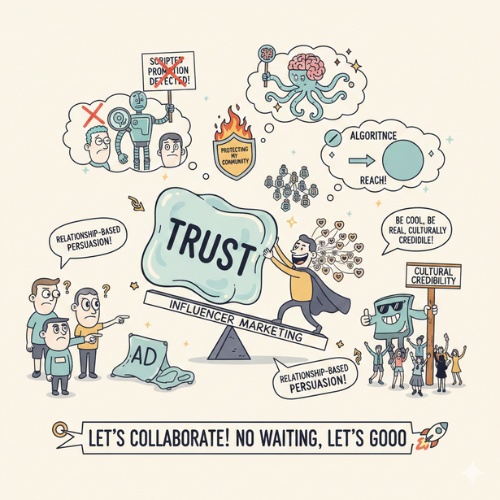
Influencer marketing works because people trust people more than ads. However, trust is fragile.
Several shifts have changed how collaborations must be designed:
- Audiences recognise scripted promotions instantly
- Creators protect their communities more fiercely
- Algorithms prioritise relevance over reach
- Brand differentiation requires cultural credibility
Learning how to collaborate with influencers today means understanding influence as relationship-based persuasion, not amplified messaging.
Let’s not wait and see how to collaborate with them
How to collaborate with influencers: A Complete Guide
Step 1: Define the Purpose of the Collaboration
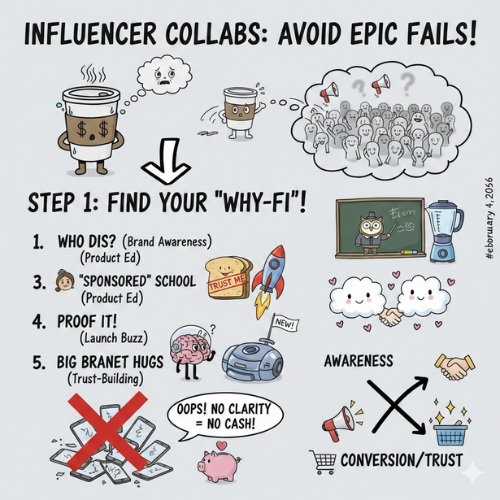
Before identifying influencers, brands must define why the collaboration exists.
Common objectives include:
- Brand awareness within a specific community
- Product education or category explanation
- Social proof during launches
- Consideration support for high-involvement products
- Community trust-building over time
Campaigns fail most often when brands skip this step and optimise for visibility without clarity.
A collaboration built for awareness looks very different from one built for conversion or trust.
Step 2: Identify the Right Type of Influencer
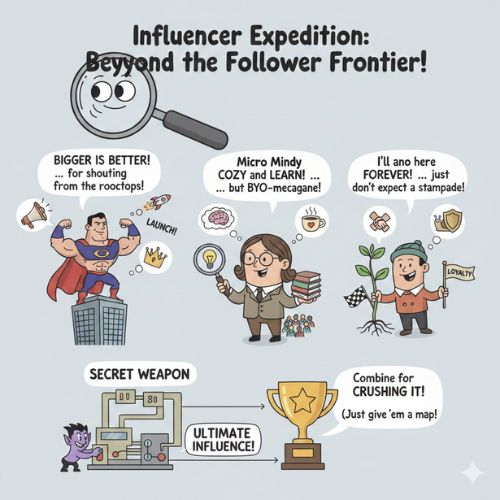
Follower count is not a strategy.
Influencers fall into functional categories based on their role, not their size.
Macro Influencers
- Strength: Reach and cultural visibility
- Best for: Awareness, positioning, launches
- Limitation: Lower perceived intimacy
Micro Influencers
- Strength: Engagement depth and trust
- Best for: Consideration, education, niche products
- Limitation: Limited scale individually
Nano Influencers
- Strength: High relevance and authority
- Best for: Long-term partnerships, advocacy
- Limitation: Slower reach expansion
The strongest influencer programs combine multiple tiers, assigning each creator a clear role.
Step 3: Evaluate Influencers Beyond Surface Metrics
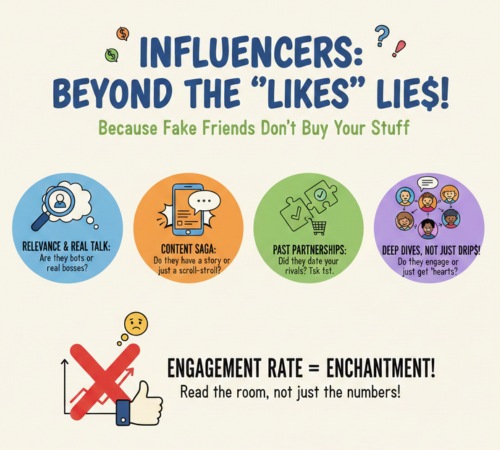
To collaborate effectively, brands must evaluate influence quality, not popularity.
Key evaluation signals include:
- Audience relevance and comment authenticity
- Content consistency and storytelling ability
- Past brand alignment
- Depth of audience interaction, not just volume
Engagement rate alone is insufficient without a qualitative review.
Look at how audiences respond, not just how often.
Step 4: Build a Collaboration Pitch That Influencers Respect

Creators receive hundreds of brand emails. Most are ignored.
A strong influencer collaboration pitch includes:
- Clear explanation of why the creator was chosen
- Understanding of their content style and audience
- Defined collaboration scope without creative restriction
- Transparent expectations around deliverables and timelines
Avoid templated outreach. Respect the creator’s creative intelligence.
Step 5: Choose the Right Collaboration Model
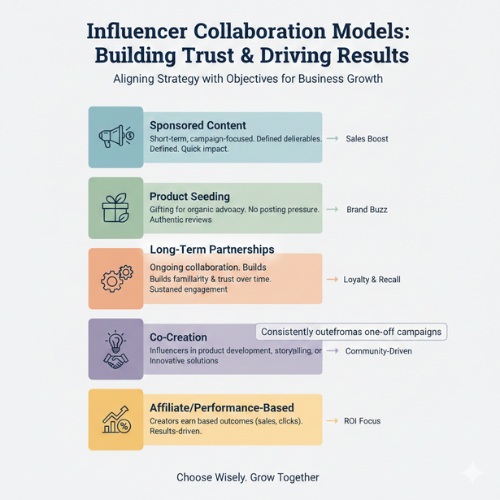
There is no single way to collaborate with influencers. The model should match the objective.
Sponsored Content
Short-term, campaign-focused content with defined deliverables.
Product Seeding
Gifting without posting pressure is often used for organic advocacy.
Long-Term Partnerships
Ongoing collaboration that builds familiarity and trust over time.
Co-Creation
Influencers participate in product development, storytelling, or campaigns.
Affiliate or Performance-Based Models
Creators earn based on outcomes rather than fixed fees.
Long-term partnerships consistently outperform one-off campaigns in trust and recall.
Step 6: Co-Create Content, Do Not Control It

Creators understand their audiences better than brands do.
Effective influencer collaboration allows:
- Creative flexibility within brand guardrails
- Platform-native storytelling
- Honest opinions rather than forced endorsements
Overly scripted content signals advertising instantly.
Audiences respond better to creator-led narratives than brand-led messaging.
Step 7: Align Platforms With Collaboration Goals
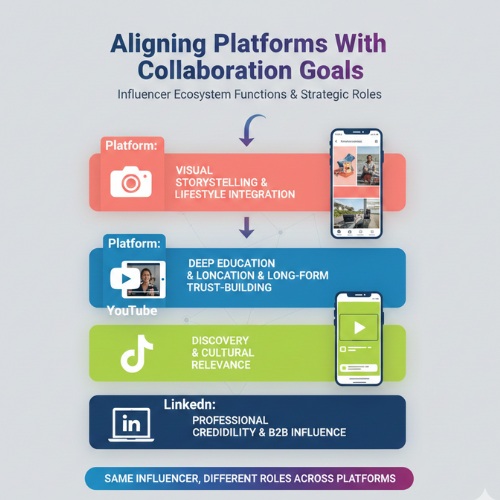
Each platform serves a different function in the influencer ecosystem.
- Instagram supports visual storytelling and lifestyle integration
- YouTube enables deep education and long-form trust-building
- TikTok excels at discovery and cultural relevance
- LinkedIn supports professional credibility and B2B influence
The same influencer may play different roles across platforms.
Step 8: Set Clear Collaboration Guidelines

Clarity protects both brands and creators.
Collaboration guidelines should cover:
- Brand values and non-negotiables
- Disclosure requirements
- Content usage rights
- Approval workflows
- Performance expectations
Transparency prevents misalignment and protects long-term relationships.
Step 9: Measure What Matters
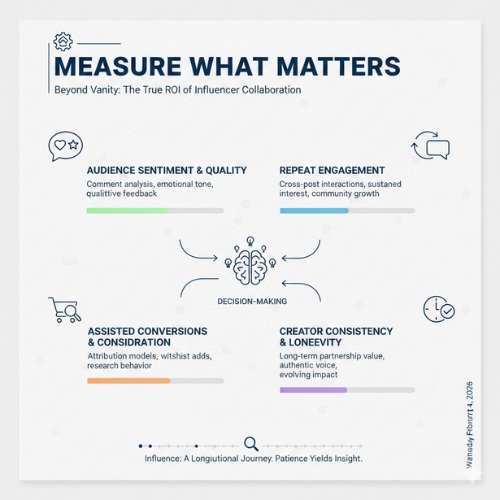
Vanity metrics distort decision-making. Effective influencer collaboration measurement includes:
- Audience sentiment and comment quality
- Repeat engagement across posts
- Assisted conversions and consideration signals
- Creator consistency over time
Influence often supports decisions rather than directly driving them. This requires patience and longitudinal analysis.
Step 10: Turn Campaigns Into Systems

The most successful brands do not run influencer campaigns. They build influencer ecosystems.
This includes:
- Creator databases and relationship management
- Performance learning loops
- Long-term collaboration pipelines
- Strategic creator retention
When influencer collaboration becomes a system, results compound.
Common Mistakes Brands Make When Collaborating With Influencers
Many influencer collaborations underperform not because of poor creators, but because of flawed expectations and execution.
Common missteps include:
- Chasing reach instead of relevance, resulting in visibility without meaningful audience connection.
- Over-directing creative output, which strips content of the creator’s voice and weakens authenticity.
- Treating creators as ad placements, rather than as partners with cultural and community insight.
- Ignoring audience signals, such as comments, sentiment, and conversation quality, that reveal real impact.
- Judging performance too early, before influence has time to translate into consideration or action.
Avoiding these mistakes often produces stronger results than increasing influencer volume or spend.
The Role of AI in Influencer Collaboration
AI has become a critical support layer in modern influencer collaboration, helping brands operate with greater precision and confidence.
Today, AI enables:
- Smarter creator discovery, using audience behaviour, content patterns, and relevance scoring rather than surface metrics.
- Advanced fraud detection, identifying inflated followers and artificial engagement before partnerships begin.
- Performance forecasting allowing brands to anticipate reach, engagement quality, and potential impact prior to launch.
- Attribution modelling, connecting influencer activity to assisted and long-term outcomes across channels.
However, AI does not replace human judgment. Cultural understanding, creative nuance, and relationship-building remain human responsibilities.
Technology enables scale. Strategy determines success.
BuzzFame: Uniting Influencers and Brands Through Strategic Collaboration
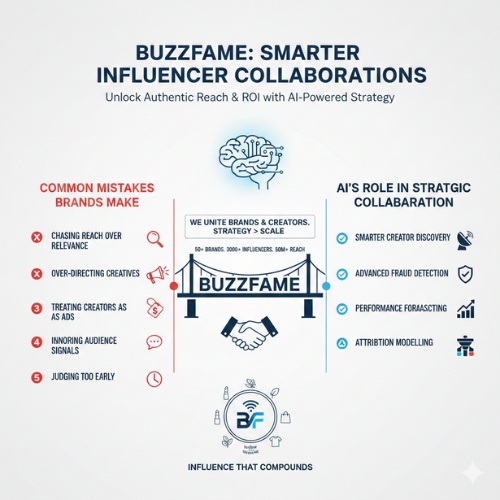
BuzzFame exists to bridge the gap between brands seeking meaningful influence and creators building genuine communities. Rather than functioning as a transactional marketplace, BuzzFame operates as a strategic partner that aligns brand intent with creator authenticity.
As the best influencer marketing agency in India, we have united 50+ leading brands with 3,000+ carefully vetted influencers across beauty, wellness, lifestyle, fashion, and emerging niches, generating over 50 million reach across platforms.
Every collaboration is built on relevance, not reach. By combining audience intelligence, creator insight, and performance measurement, we ensure brands and influencers grow together, creating influence that compounds beyond campaigns.
Influencer Collaboration Is a Relationship, Not a Transaction
Learning how to collaborate with influencers is ultimately about understanding influence as a human system.
The brands that succeed:
- Respect creators as partners
- Invest in long-term trust
- Design collaboration with intention
- Measure impact beyond immediacy
Influencer marketing is not becoming less human. It is becoming more accountable.
FAQs Related To How To Collaborate With Influencers
1. How do brands collaborate with influencers?
Brands collaborate with influencers by identifying relevant creators, aligning objectives, co-creating content, setting clear expectations, and measuring performance based on engagement, trust, and business outcomes.
2. What is the best way to approach influencers?
The best approach is personalised outreach that explains why the creator is a fit, respects their creative voice, and clearly outlines collaboration goals without rigid control.
3. Do influencer collaborations work for small brands?
Yes. Small brands often benefit most by collaborating with micro and niche influencers who have strong community trust and higher engagement relevance.
4. How much should brands pay influencers?
Compensation depends on audience size, engagement quality, content format, usage rights, and collaboration scope. There is no universal rate card.
5. Are long-term influencer collaborations better?
Long-term collaborations generally build stronger trust, better recall, and more consistent performance compared to one-off sponsored posts.
6. What platforms are best for influencer collaboration?
The best platform depends on goals. Instagram and TikTok support discovery, YouTube builds trust, and LinkedIn works for professional or B2B influence.
7. How do you measure influencer collaboration success?
Success is measured through engagement quality, sentiment, assisted conversions, brand lift, and long-term audience interaction rather than likes alone.
8. Can influencer collaborations drive sales?
Yes, but often indirectly. Influencer collaborations support consideration and confidence, contributing to assisted rather than immediate conversions.
9. What mistakes should brands avoid in influencer collaboration?
Brands should avoid over-scripting content, choosing influencers based only on follower count, and treating collaborations as purely transactional.
10. How should brands start collaborating with influencers?
Brands should start by defining clear goals, identifying relevant creators, testing small partnerships, and building relationships before scaling.